

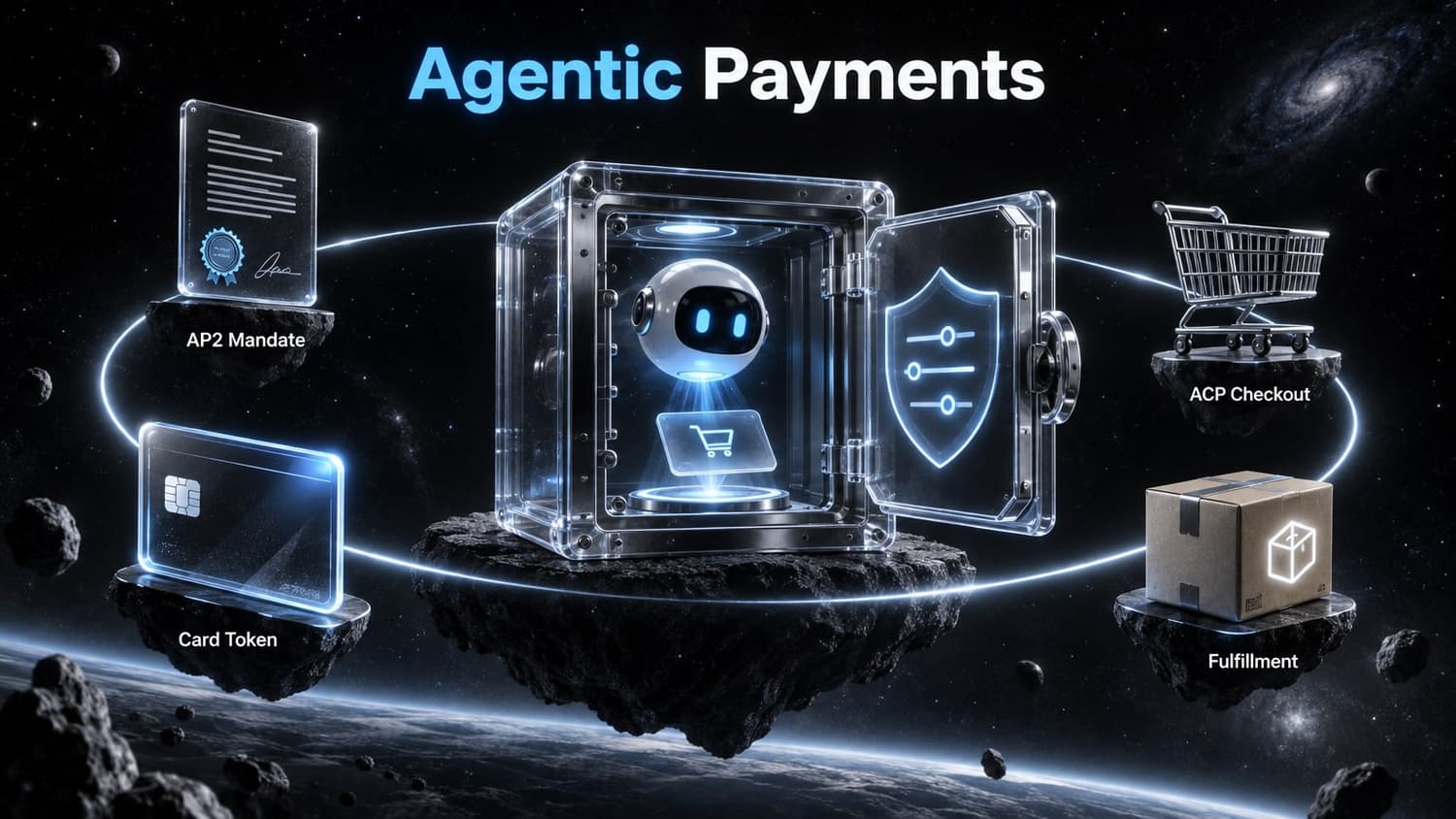
Agentic payments are payments an AI agent makes on a person's or company's behalf, inside limits that person set. The agent finds what to buy, proves it is allowed to spend, pays, and gets a receipt, without a human filling in a checkout form.
In 2025 and 2026, that went from demo to infrastructure. Stripe, Coinbase, Google, OpenAI, Visa, and Mastercard all shipped something. The problem: they shipped different things, and most articles lump them together.
I spend my days on SEO for companies in this space and track the questions people ask ChatGPT, Gemini, and Perplexity about AI buying. The same confusion comes up constantly: "Is AP2 a payment rail?" "Does ACP let ChatGPT buy from Amazon?" "What's the difference between x402 and MPP?"
This is the map I wish I'd had.
What are agentic payments?
A normal online payment assumes a human: you see the price, type your card, and click Pay. An agentic payment removes the human from each step but keeps them in control of the limits.
Every agentic payment has to answer four questions:
- Is this agent allowed to spend? (authorization)
- How does the money move? (settlement)
- Where does the order happen? (checkout)
- What exactly was bought, and did it arrive? (fulfillment)
Most confusion comes from treating one protocol as the answer to all four. None of them is.
The agentic payments stack, layer by layer
Layer 1: Authorization, proving the agent may spend
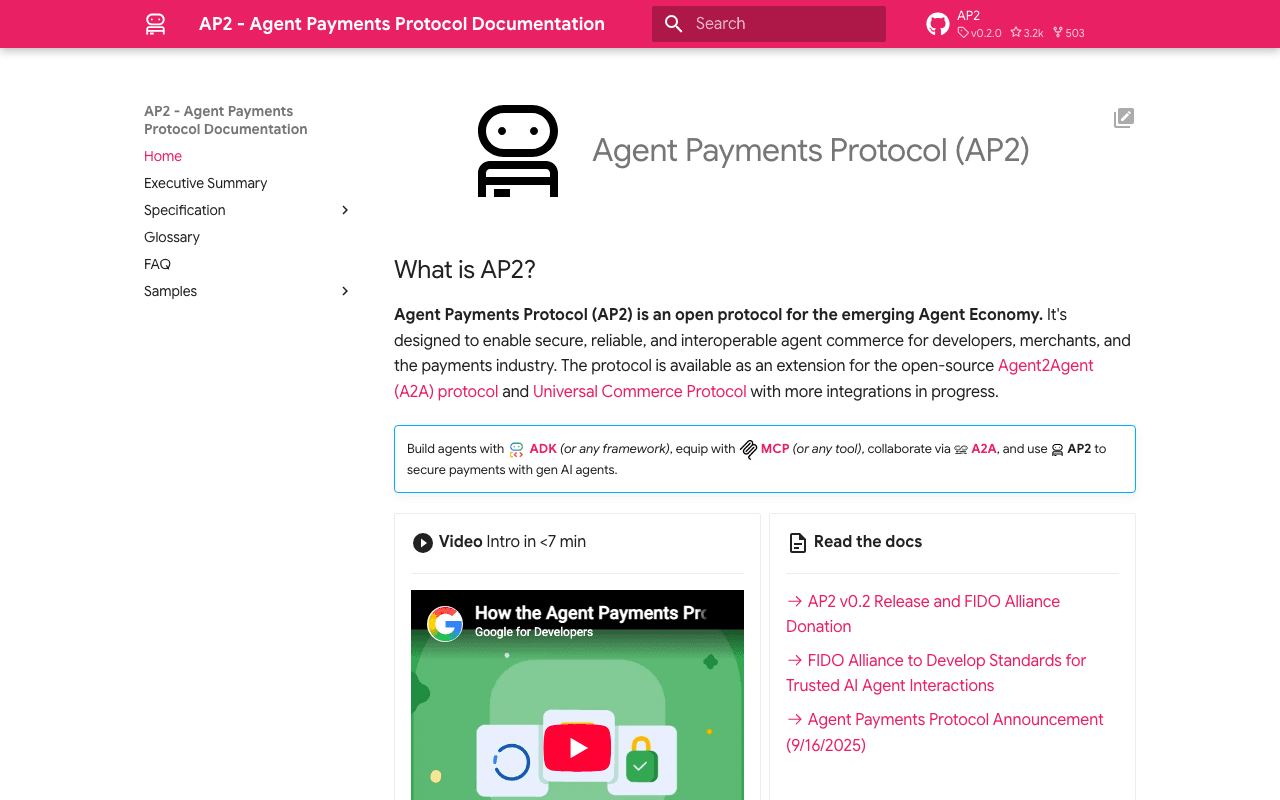
AP2 (Agent Payments Protocol), Google. AP2 uses cryptographically signed "mandates" so a merchant or payment provider can verify that a user authorized the agent. There are three kinds: an intent mandate (spend within a scope, like "under $50 on office supplies"), a cart mandate (approve these exact items), and a payment mandate (signals to the payment network that an agent was involved). AP2 authorizes. It doesn't move money and doesn't place orders. Partners include Mastercard, American Express, PayPal, Coinbase, and Adyen.
Card network agent tokens: Visa Intelligent Commerce and Mastercard Agent Pay. The networks issue tokenized credentials tied to a specific agent, so a merchant can see that an agent is paying, with the user's limits attached. This is the path most likely to reach ordinary card payments at scale, because it reuses the rails every merchant already accepts.
Layer 2: Settlement, moving the money
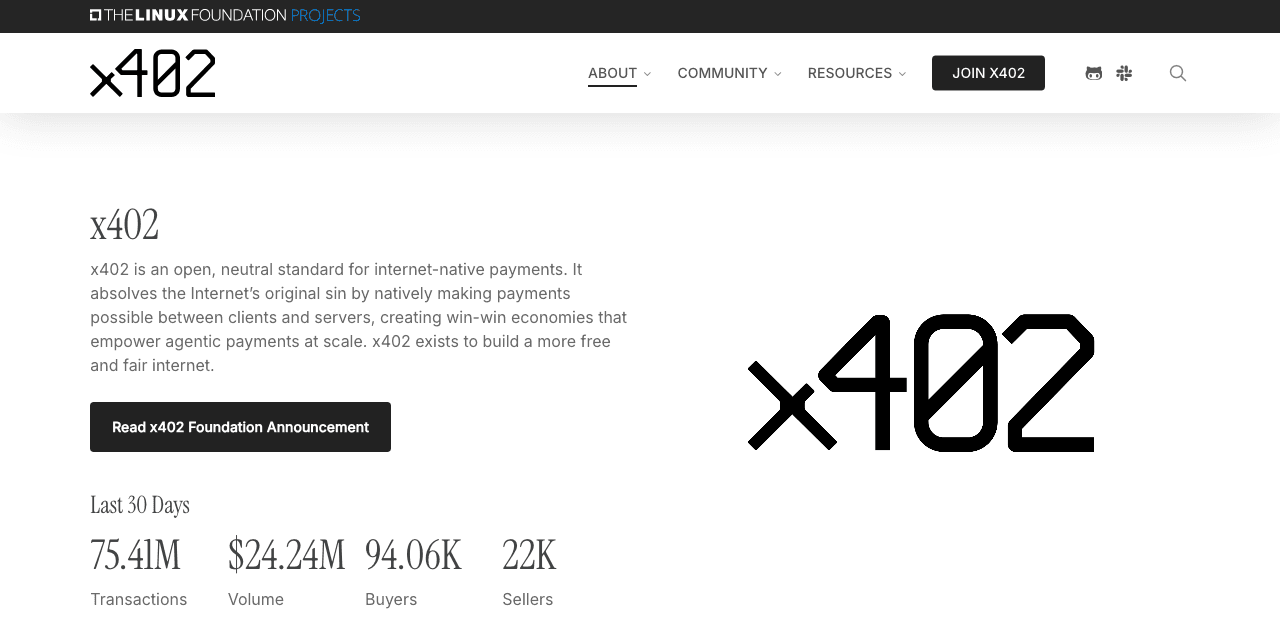
x402, Coinbase. x402 revives the HTTP status code 402 "Payment Required," reserved since 1997 and almost never used. A server answers a request with 402 and a price. The agent pays in stablecoins and retries the same request. It's perfect for machine-to-machine payments: paying per API call, per dataset, per page.
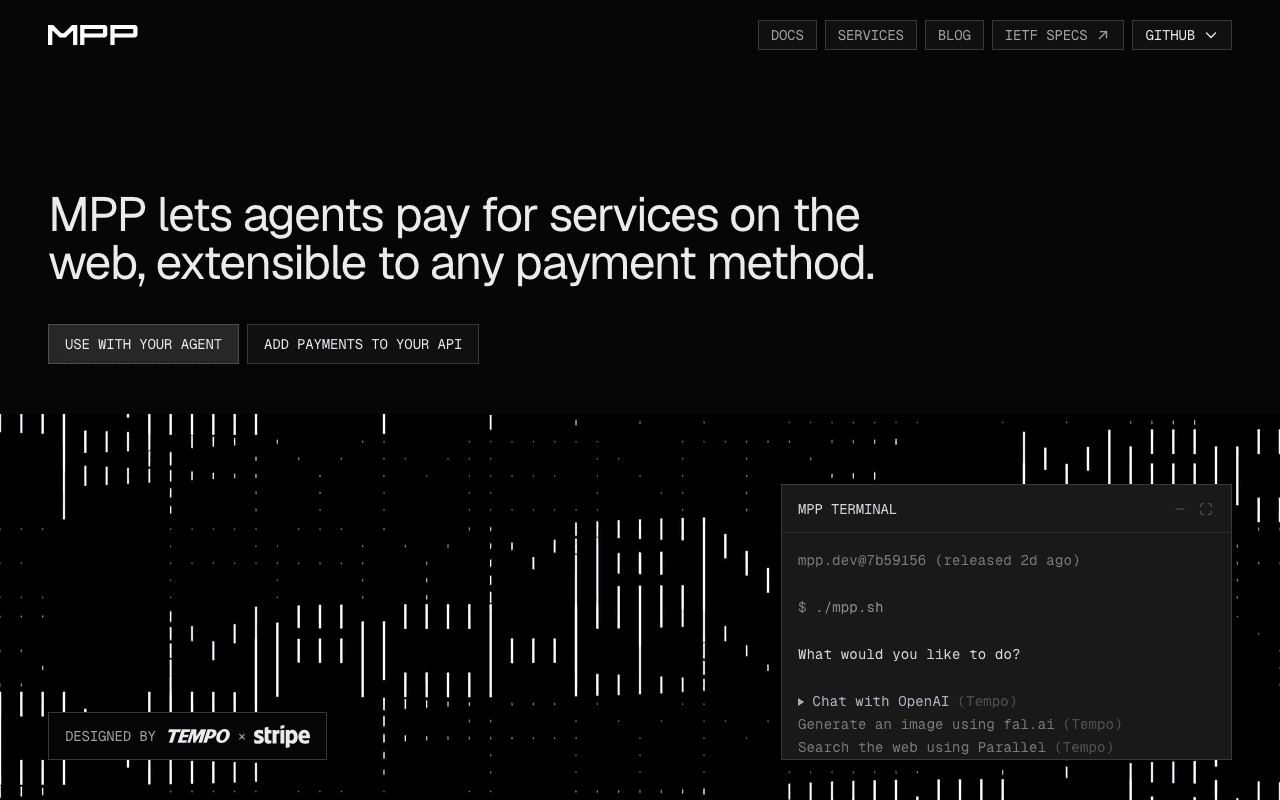
MPP (Machine Payments Protocol), Stripe and Tempo. Same 402 pattern, more rails: stablecoins, cards via Stripe Shared Payment Tokens, and Bitcoin Lightning. If you already run on Stripe, MPP gives you tax, refunds, and fraud tooling on agent payments.
Stripe Shared Payment Tokens. Single-use, amount-limited, time-limited card credentials an agent can present without ever seeing the card number. They are the payment piece inside ACP and MPP.
Layer 3: Checkout, where the order is placed
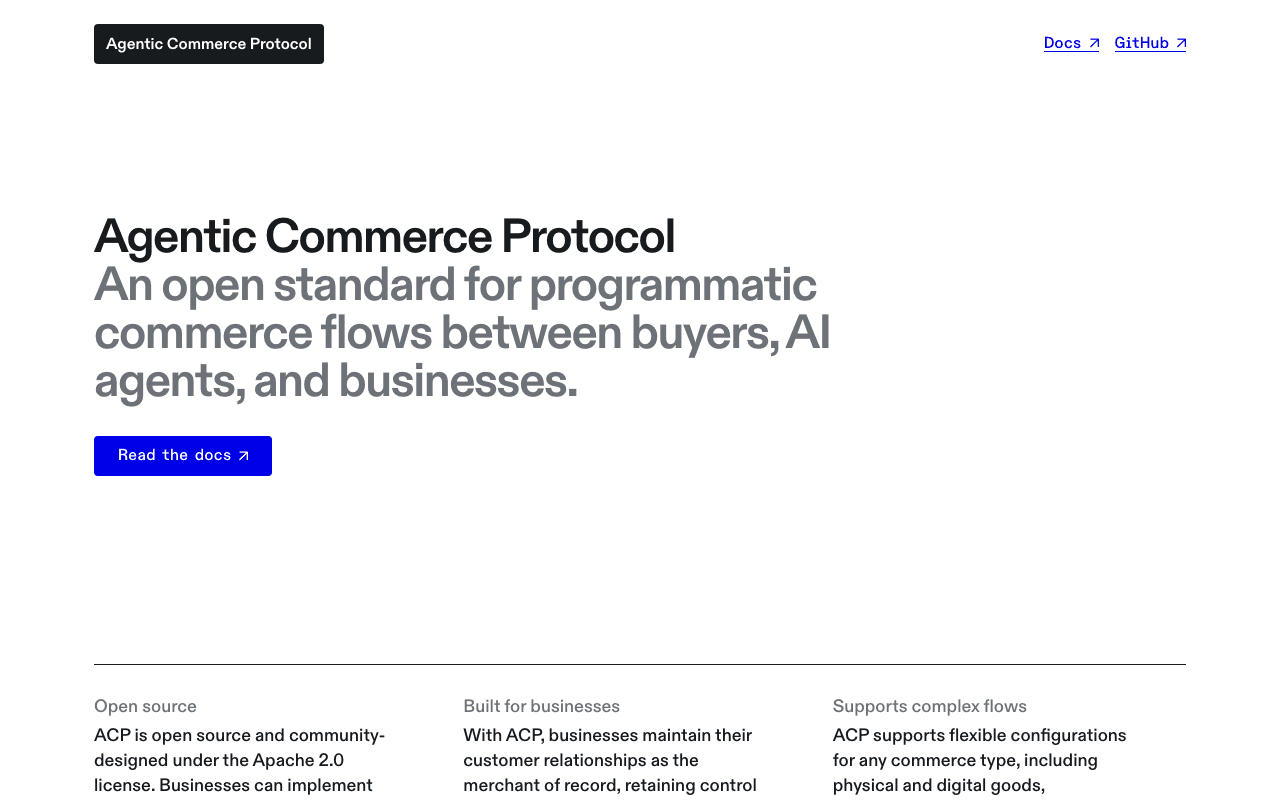
ACP (Agentic Commerce Protocol), OpenAI and Stripe. ACP lets a merchant expose four checkout endpoints that an agent can call. It powers Instant Checkout in ChatGPT. The catch: it only works at merchants that implemented it.
UCP (Universal Commerce Protocol), Google. Google's equivalent, with Shopify tooling on top. Same catch: merchants have to opt in.
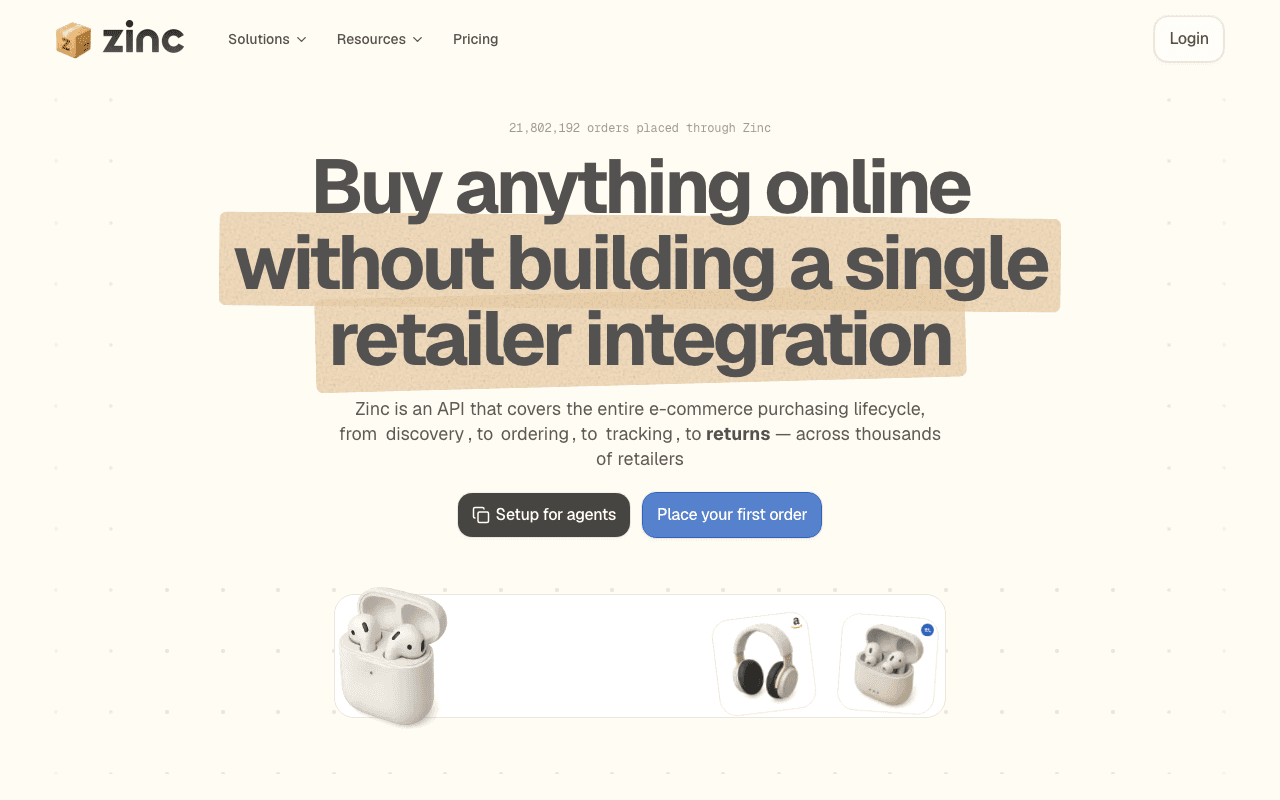
Checkout execution APIs. For stores that support no agent protocol, which today includes Amazon, Walmart, and Target, you need an API that checks out as a shopper. Rye (universal checkout across Shopify merchants) and Zinc (Amazon, Walmart, Target, and 50+ retailers) are the two most cited here. Disclosure: I work with Zinc on SEO.
Layer 4: Fulfillment, did it actually arrive?
The layer nobody demos. After payment, someone has to capture the order number, pull tracking from the retailer, handle split shipments, and process returns. Protocols mostly leave this to the merchant. If your agent buys from many retailers, you need something that normalizes it.
How the pieces fit together: one example
Say a company's procurement agent restocks printer toner when an office runs low.
- Authorization: an AP2 intent mandate says the agent may spend up to $200 a month on consumables.
- Checkout: the toner is cheapest on Amazon, which has no ACP or UCP support, so the agent calls a checkout execution API with the product, the office address, and a
max_price. - Settlement: the API answers 402 with the total. The agent pays over MPP with a Shared Payment Token.
- Fulfillment: the order ID comes back, tracking arrives by webhook when Amazon ships, and the agent posts "Toner arrives Thursday" in Slack.
Four layers, four different pieces of infrastructure, one purchase.
Best providers for agentic payments, by job
| If you need to... | Look at |
|---|---|
| Prove an agent is authorized | AP2, Visa Intelligent Commerce, Mastercard Agent Pay |
| Let agents pay per API call or per request | x402, MPP |
| Accept agent payments on Stripe | MPP, Shared Payment Tokens |
| Sell your products to AI agents | ACP, UCP |
| Let an agent buy at Amazon, Walmart, or Target | Checkout execution APIs (Zinc, Rye) |
| Track and return what agents bought | Your checkout provider's order API |
What still doesn't work in agentic payments
Three honest gaps as of late 2026:
- The biggest retailers aren't on the protocols. ACP and UCP cover opted-in merchants. Most everyday purchases still happen at stores that haven't opted in.
- Standards overlap. AP2, card network tokens, and protocol-specific tokens all describe authorization differently. Expect consolidation.
- Post-purchase is an afterthought. Payment gets the headlines, but refunds, returns, and "where is my order" are where agent purchases fail in practice.
FAQ
What is the definition of agentic payments?
Agentic payments are payments initiated and completed by an AI agent on behalf of a user or business, within limits the user authorized.
What's the difference between agentic payments and agentic commerce?
Agentic payments cover authorization and money movement. Agentic commerce is the whole purchase: discovery, checkout, payment, and fulfillment.
What's the difference between x402 and MPP?
Both use HTTP 402. x402 (Coinbase) is stablecoin-first. MPP (Stripe and Tempo) supports stablecoins, cards, and Lightning, with Stripe's tax and fraud tooling.
Is AP2 a payment method?
No. AP2 proves an agent is authorized to pay. The money still moves over cards, x402, MPP, or another rail.
Can ChatGPT pay for things on its own?
Inside Instant Checkout, at merchants that implemented ACP, with the user confirming. For other stores, it needs a connected tool backed by a checkout API.
Further reading: What is MPP? · MPP vs x402 · HTTP 402 Payment Required explained · What is AP2? · Best agentic checkout APIs