
- Best all-in-one platform: Ahrefs. The biggest link index and the best keyword data, from $129/mo (free for your own sites).
- Best value all-in-one: SE Ranking. Rank tracking, audits, and backlinks from $103/mo billed annually.
- Best technical crawler: Screaming Frog. Free up to 500 URLs, £199 a year after that.
- Best for content workflow: StoryChief. SEO editor, Search Console data, and publishing in one place.
- Best free stack: Search Console, Ahrefs Webmaster Tools, and Screaming Frog.
Most "best SEO tools" lists put 40 tools in a row and leave you to guess. You do not need 40. You need one platform for data, one crawler, and a few free tools, plus something for the job you do most, whether that is content, links, or AI search.
These are the tools I use across my own sites (il.ly, LinkDR, AI SEO Tracker) and client work, grouped by job, with September 2026 prices.
Disclosure: I run LinkDR and AI SEO Tracker. Semrush links are affiliate links.
All-in-one SEO platforms
Pick one. They overlap heavily, and paying for two is the most common way SEO budgets get wasted.
1. Ahrefs
Ahrefs is the platform I use most. Its link index is the deepest I have worked with, and Keywords Explorer, Site Audit, Rank Tracker, and Content Explorer cover nearly everything else.
I also use its API through an AI agent to pull SERPs and Search Console data straight into my analysis, which saves hours of CSV exports.
- Best for: backlink research, competitor analysis, keyword research
- Free option: Ahrefs Webmaster Tools covers backlinks and site audits for sites you verify
- Pricing: Starter $29/mo (limited), Lite $129/mo, Standard $249/mo, Advanced $449/mo
2. Semrush
Semrush matches Ahrefs on most jobs and goes further on PPC and competitive ad research. Its Site Audit and Backlink Audit (with toxic link scoring) are strong, and the free plan gives you 10 reports a day.
Adobe completed its $1.9 billion acquisition in April 2026, so expect pricing and packaging to keep shifting.
- Best for: teams that run SEO and paid search together
- Pricing: SEO $139/mo ($117.33/mo billed annually). SEO + AI Search plans start at $199/mo, up to 17% less billed annually.
3. SE Ranking
SE Ranking is the value pick. Rank tracking, site audits, keyword research, backlink monitoring, and white-label reports are all included, and you pay for capacity rather than features. Its index is smaller than Ahrefs', which rarely matters for your own site.
- Best for: agencies and small teams that need rank tracking and client reports
- Pricing: Core $129/mo ($103.20/mo billed annually), Growth $279/mo. 14-day free trial.
Technical SEO tools
4. Screaming Frog
Screaming Frog SEO Spider is still the standard crawler. It finds broken links, redirect chains, missing and duplicate titles, canonical and hreflang problems, and JavaScript rendering issues. Custom extraction lets you pull almost anything off every page.
- Pricing: Free up to 500 URLs. A license is £199 ($279) per year, with no auto-renewal.
5. Sitebulb
Sitebulb crawls like Screaming Frog but explains what it finds. Its prioritized hints and crawl maps make it easier to hand a report to a client or developer.
- Pricing: Lite from about $13.50/mo billed annually, Pro about $35/mo, cloud plans from $125/mo. 14-day free trial.
6. Conductor Monitoring (formerly ContentKing)
Conductor Monitoring watches your site around the clock instead of crawling on demand. If a deploy removes a canonical or noindexes a key page, you get an alert within minutes, not at your next audit.
Keyword research tools
7. Keywords Everywhere
Keywords Everywhere puts search volume, CPC, and related keywords right inside Google results. It is the cheapest way to check a keyword without opening a full platform.
- Pricing: annual plans only. Bronze $84/yr (100,000 credits), Silver $168/yr, Gold $480/yr. Credits are valid for 12 months from purchase.
8. Google Keyword Planner
Google Keyword Planner gives volume ranges straight from Google Ads data. It is free with a Google Ads account and best for sanity-checking volumes from third-party tools.
Content SEO tools
9. StoryChief
StoryChief combines an SEO content editor with Google Search Console data, a content audit tool, and multi-channel publishing. It is the tool I would pick for a content team that writes, reviews, and publishes in one workflow instead of passing Google Docs around.
- Best for: content teams and agencies publishing across a blog and social channels
10. Frase and MarketMuse
Frase builds content briefs from the pages that already rank, so writers know which subtopics and questions to cover. MarketMuse works at the site level, showing which topics you have not covered yet to build topical authority.
11. ChatGPT and Claude
AI assistants are now part of the SEO workflow, mostly for analysis rather than writing. What works:
- Search Console analysis: export queries and pages, then ask it to cluster by intent, find pages with falling clicks, or flag two URLs competing for the same query.
- Bulk titles and meta descriptions: give it the target query and current title, and ask for options under 60 characters.
- Crawl triage: paste a Screaming Frog export and ask which issues matter most.
My ChatGPT prompts for SEO cover the prompts I reuse.
Link building tools
12. LinkDR
LinkDR is the link building service I run. It places links on vetted sites with real traffic, from $160 per link at DR 30+ to $500 at DR 60+, and every price includes publisher outreach, the article, and tracking after placement.
13. Outreach and monitoring tools
- Hunter: finds email addresses for any domain.
- Respona and Pitchbox: manage outreach campaigns and follow-ups at scale.
- Linkody: alerts you when a link you built disappears. More options in my guide to backlink monitoring tools.
AI search visibility tools
14. AI SEO Tracker and alternatives
Ranking in Google is no longer the whole picture. ChatGPT, Perplexity, Gemini, and Google's AI Overviews answer questions directly, and you want to be the brand they mention.
- AI SEO Tracker: my tool for tracking how often and where your brand shows up in AI answers.
- Profound, Peec AI, and Otterly: alternatives, with Profound aimed at enterprise teams.
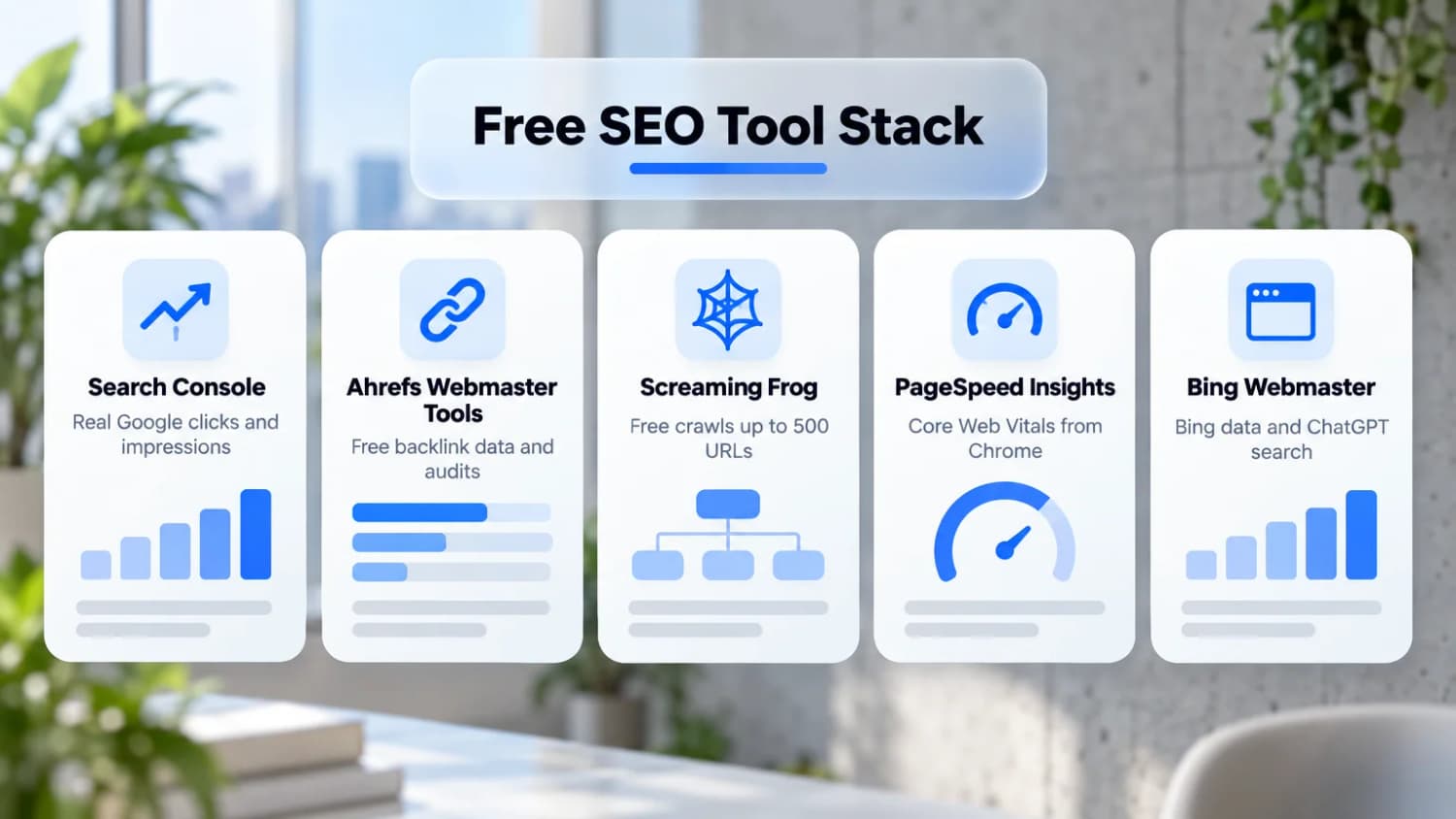
Free SEO tools
You can do serious SEO without paying:
- Google Search Console: the only source of real Google clicks, impressions, and indexing data. Start here.
- Ahrefs Webmaster Tools: free backlink data and site audits for your verified sites.
- Screaming Frog: free crawls up to 500 URLs.
- PageSpeed Insights: Core Web Vitals from real Chrome users.
- Bing Webmaster Tools: Bing data. ChatGPT search draws partly on Bing's index, so it matters more than it used to.
- Google Keyword Planner and Google Trends: search volumes and seasonality.
Which SEO tools should you use?
- $0/month: Search Console, Ahrefs Webmaster Tools, Screaming Frog free, and PageSpeed Insights. Enough for most sites under 500 pages.
- About $50/month: add Keywords Everywhere and a Screaming Frog license for faster research and full crawls.
- About $150-$300/month: add one all-in-one platform (Ahrefs, Semrush, or SE Ranking) once you are doing competitor and backlink research every week.
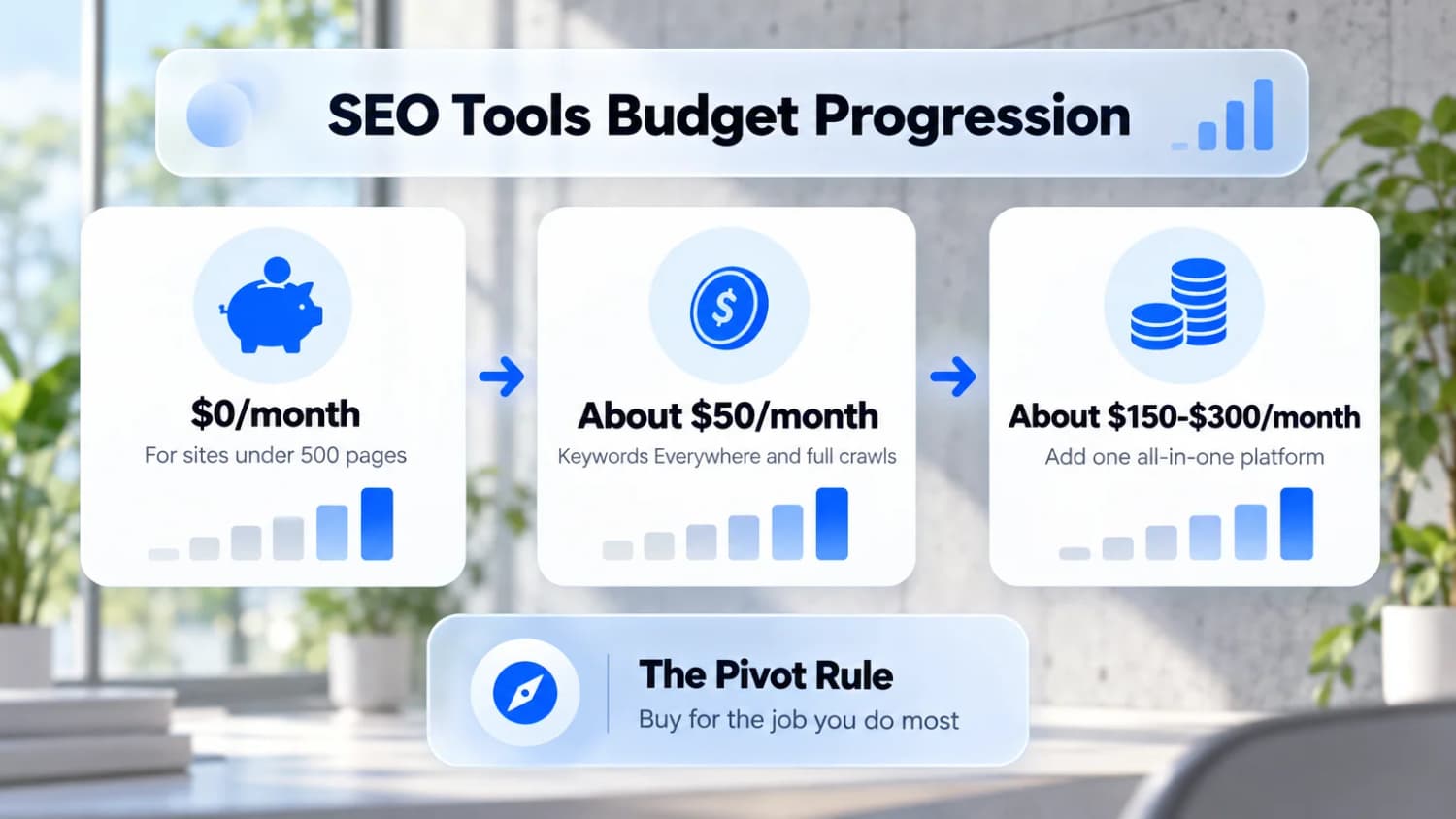
Buy for the job you do most. If most of your work is content, a content tool beats a second data platform. If it is links, spend on link data and monitoring.
FAQ
What are the 5 best SEO tools?
Google Search Console, Ahrefs, Semrush, Screaming Frog, and a keyword tool like Keywords Everywhere cover most SEO work. Add SE Ranking if you need affordable rank tracking.
What is the best free SEO tool?
Google Search Console. It is the only tool with real data on how Google sees and ranks your site. Pair it with Ahrefs Webmaster Tools for backlinks.
Is SEO dead now with AI?
No. AI answers pull from pages that already rank and are well linked, so classic SEO still feeds AI visibility. What changed is that you also need to track and optimize for mentions in AI answers, not just blue links.
Can ChatGPT do an SEO audit?
Partly. It can analyze Search Console exports and crawl data you give it, but it cannot crawl your site or see rankings on its own. See what ChatGPT can and cannot audit.
What is the 80/20 rule in SEO?
A small share of pages drives most of your traffic, and a few fixes drive most of the gains. Find the pages ranking in positions 5-20 with the most impressions, improve those first, and ignore minor crawler warnings.