

TL;DR: How to write blog posts with AI (without nuking your SEO)
- Start with search intent and outline manually.
- Draft with AI, but keep sections short and specific.
- Inject experience (screenshots, data, quotes, mistakes you made).
- Optimize on-page (title, H1, structure, internal links).
- Fact-check + edit like a hawk; publish, then iterate.
Google does not penalize "AI content." It penalizes bad content. If your post demonstrates experience, satisfies intent, and is useful, it can rank, regardless of the tool you used to draft it.
In this guide, I’ll show you a simple, repeatable workflow to write blog posts with AI that readers love and algorithms reward.
Step 1: Choose a topic with real intent
Skip vague ideas. Pick a query where a strong post can actually win.
- Find topics: Google Search Console (positions 3–20), Ahrefs, or LinkDR's keyword analyzer.
- Validate the SERP: What formats rank? What questions are answered? Any gaps you can fill?
- Decide your angle: What unique experience or data can you add?
If you’re starting from zero and need a base of supporting content, services like Outrank can produce 30 SEO-ready articles in month one so you have internal-link fuel for new posts.
Step 2: Outline by hand (non‑negotiable)
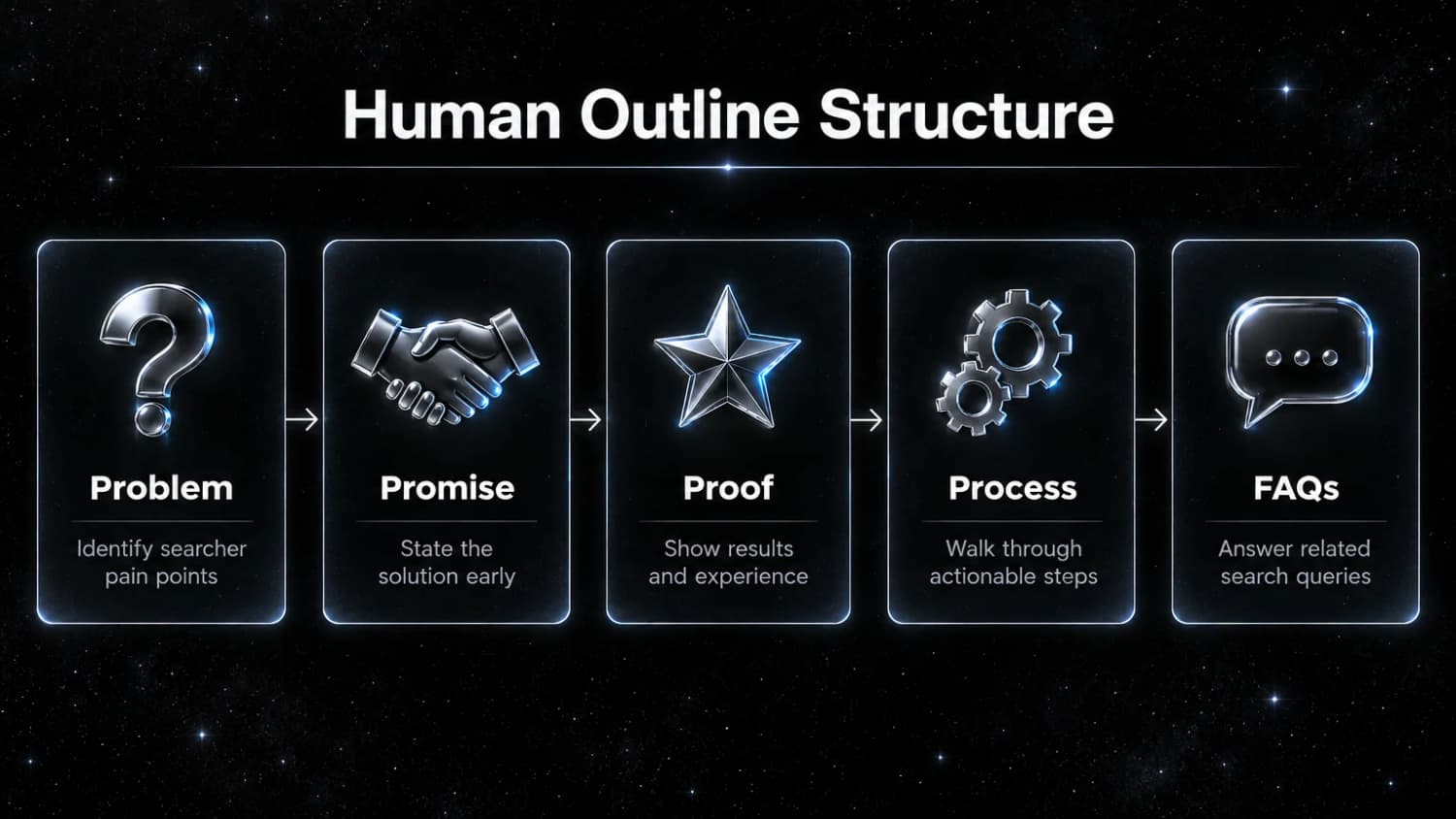
Drafting starts with a human outline. Keep the structure laser-focused on intent:
- Problem → Promise → Proof → Process → FAQs → Next steps
- Add target entities/phrases people expect to see
- Note where you’ll add screenshots, charts, or personal anecdotes
Use this quick prompt to generate ideas you might miss:
You are an editor. Given this query: "write blog posts with AI", list subtopics, entities, and FAQs the top 10 pages cover.
Identify 5 gaps I can add based on hands‑on experience.
Step 3: Draft with AI the right way
Work section-by-section. Keep prompts specific, short, and scoped to your outline.
Write a 120–180 word section that explains why outlines matter for AI writing. Constraints: no fluff, simple language, include one actionable sentence. Target reader: solo founder. Tone: practical.
Tips:
- Cap paragraph length and word count.
- Ask for bullets, examples, or mini checklists.
- Regenerate until it’s crisp. Delete clichés.
Step 4: Inject E‑E‑A‑T (what AI can’t fake)
This is where rankings are won.

- Add your own screenshots, results, and failures.
- Cite primary sources and link out when helpful.
- Add author bio, byline, and clear contact/about pages.
- Use internal links from older, relevant pages. If you need fresh posts to link from, Outrank is a quick way to seed topical support.
- Include visual content like memes from MagicMeme to make posts more engaging and shareable.
Step 5: On‑page SEO checklist
- Unique title tag with the phrase "write blog posts with AI" naturally
- H1 aligned with the title; first 100 words answer the query
- Descriptive subheadings; short paragraphs; scannable bullets
- One primary CTA and relevant internal links
- Compressed images with descriptive alt text
Step 6: Fact-check, edit, and de‑template
AI drafts are starting points. Before publishing:
- Verify every stat and claim; replace with primary sources
- Remove generic filler ("leverage," "unlock," etc.)
- Read aloud. Cut 10–20% for clarity
- Run through a plagiarism check if needed
Step 7: Publish → Iterate
Hit publish, request indexing in Google Search Console, and iterate based on impressions/queries you see over the next 2–4 weeks.
Add one improvement per day: a stat, a screenshot, an FAQ.
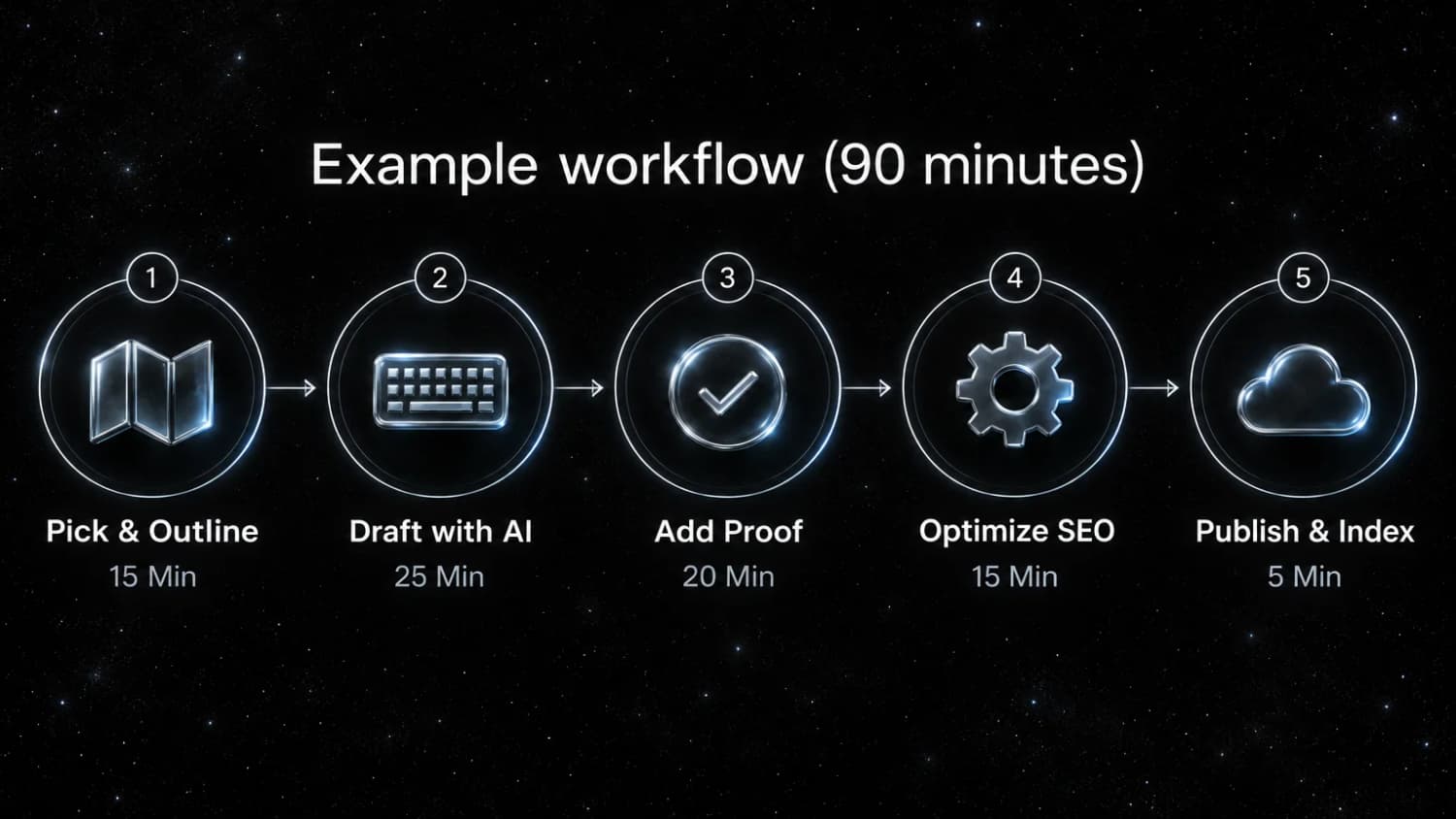
Example workflow (90 minutes)
- Pick keyword + outline (15 min)
- Draft sections with AI (25 min)
- Add your proof (screenshots, examples) (20 min)
- Optimize on-page + links (15 min)
- Publish + request indexing (5 min)
Recommended tools
Also helpful: LinkDR for outreach and SERP/keyword analysis; Google Search Console for fast feedback loops.
FAQs
Will Google penalize AI-written posts?
No. Google rewards helpful content. If your post demonstrates experience and solves the searcher’s problem, how you drafted it doesn’t matter.
Do I need to disclose AI usage?
If AI meaningfully assisted, it’s good practice to disclose editorially. It can also build trust with technical audiences.
How long should AI‑assisted posts be?
As long as needed to satisfy intent. Many queries are solved in 800–1,500 words when you’re specific and visual.
Writing blog posts with AI doesn’t hurt SEO, publishing low‑quality, unoriginal, unhelpful content does. Use AI to move faster, then add the human edge that wins rankings.