

- Record: Google Meet or Cal.com, with the prospect's consent.
- Transcribe: Meet's built-in transcripts, Fathom (free plan, unlimited calls) or Descript (60 free minutes a month).
- Summarize and follow up: paste the transcript into Google AI Studio and use the three prompts below.
- Get better: ask the AI for 3 things you did well and 3 to fix after every call.
I run sales calls as a founder and SEO consultant. I used to forget details from those calls and then write the proposal from scratch. Now every call gets recorded, transcribed and summarized, and the proposal starts from what the client actually said.
Everything below is free or close to it. It's worth setting up if you:
- forget details after back-to-back calls (or have ADHD and know the feeling)
- want to reread what a client said before you send a price
- share calls with a teammate who wasn't on them
- want honest feedback on how you pitch
| Tool | Cost | What you get |
|---|---|---|
| Google Meet | Included in eligible Google Workspace plans | Video calls, recording, automatic transcripts |
| Cal.com | Free for one person | Booking pages, reminders, Google Meet links |
| Fathom | Free plan | Unlimited recordings, transcripts and AI summaries |
| Descript | Free plan (60 media minutes a month) | Cleaner transcripts, speaker labels, editing |
| Google AI Studio | Free tier | Gemini models for summaries, proposals and feedback |
Solo founders and freelancers get the most from it. A small team can run the same flow for a good while before anyone has to sign a Gong contract.
1. Recording the call
First you need the conversation on file. I use two tools for that.
Ask first. Tell the prospect you're recording for note-taking and get their OK before you hit record. Some regions require it by law, and nobody likes finding out afterwards.
Google Meet
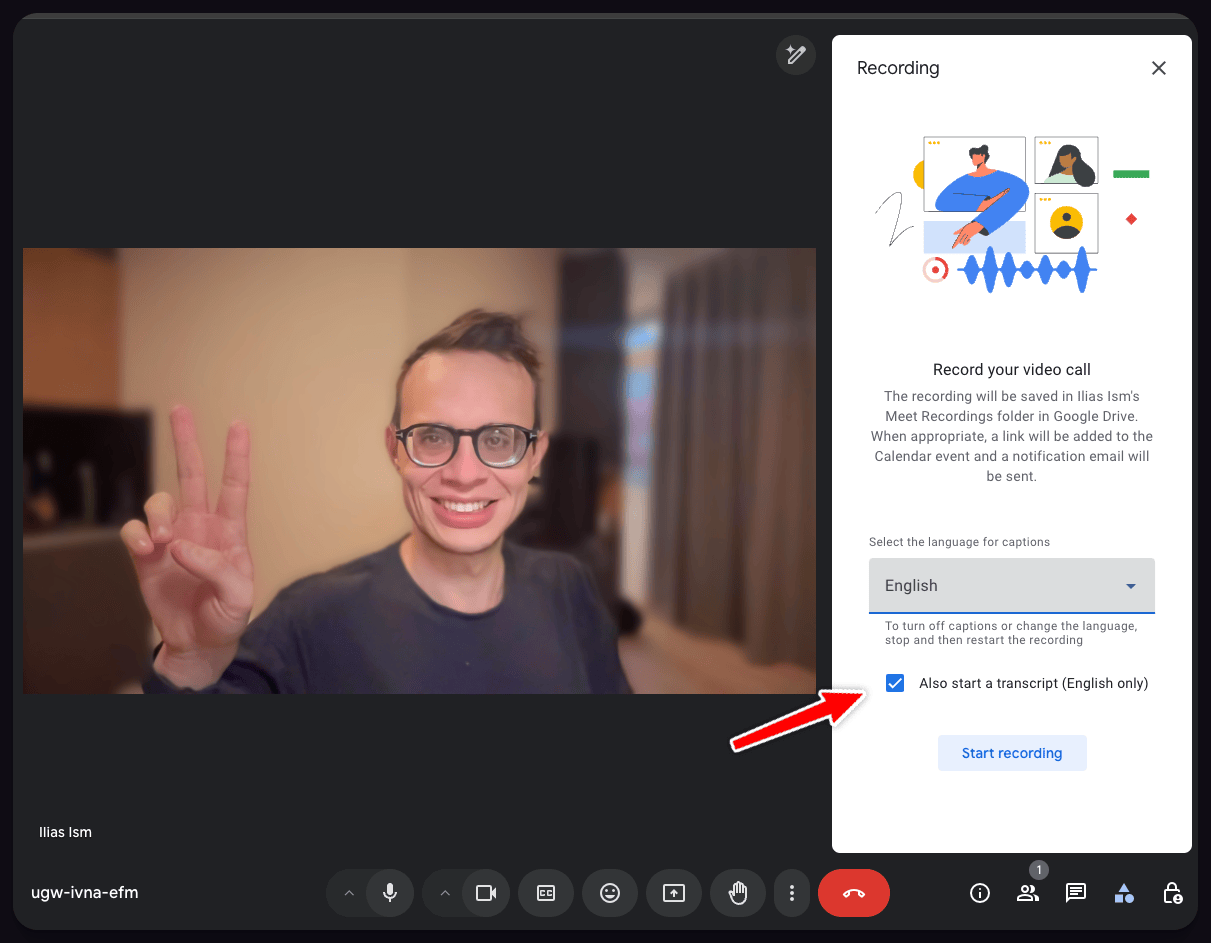
Most of my sales calls happen on Google Meet. It's reliable and it already sits in my calendar.
- Recording: one click from the meeting tools menu.
- Transcripts: Meet writes an automatic transcript in English, French, German, Italian, Japanese, Korean, Portuguese or Spanish. You need a Google Workspace edition that includes Transcripts.
- Screen sharing: for walking a client through a proposal or a demo.
- Calendar: the transcript gets attached to the Google Calendar event.
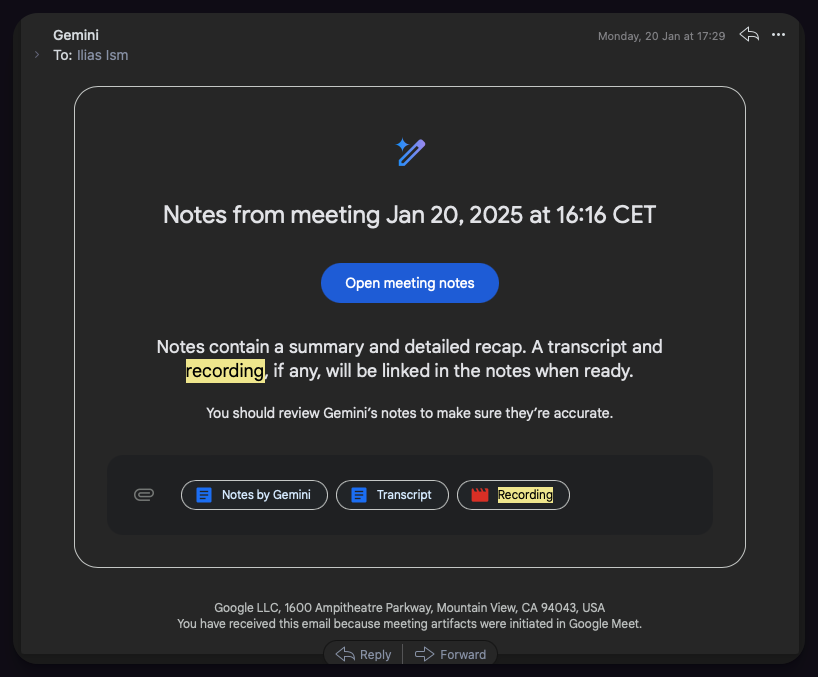
When the call ends, Google emails the host a link to the transcript and saves it to Drive, in the "Google Meet" folder. If you recorded, the video lands there too.
Cal.com
Cal.com is my scheduling tool. It's an open-source Calendly alternative, and the plan for one person is free.
- Booking links: clients pick a slot from my Cal.com page. No email back-and-forth.
- Meet links: each booking creates a Google Meet link and drops it into the calendar event.
- Booking questions: the booking form collects what I need to know before the call.
- Reminders: email and SMS reminders go out to both of us, which cuts no-shows.
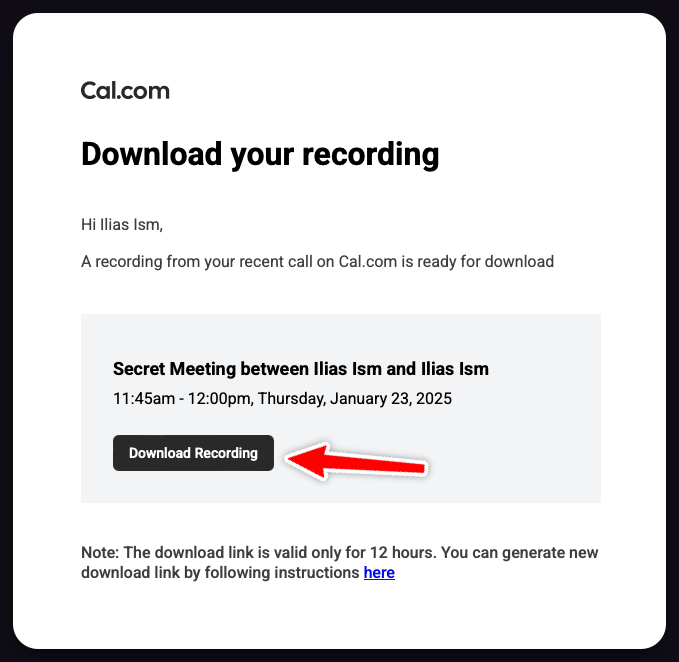
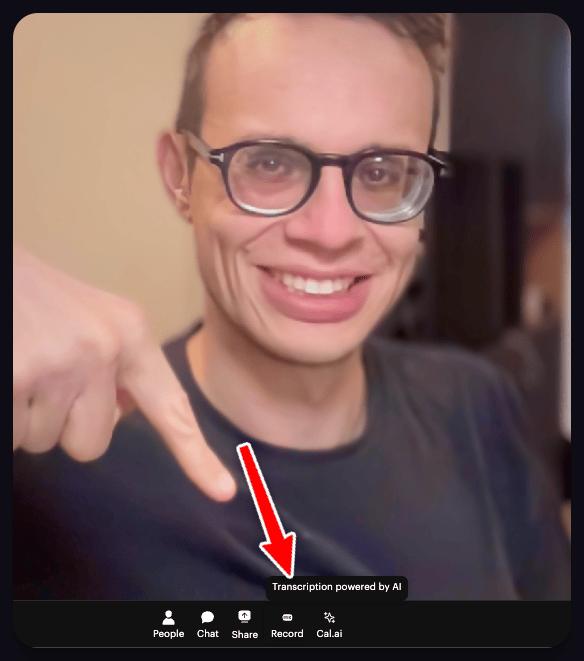
Calls on Cal Video, Cal.com's own video app, can be recorded from the call screen. Afterwards you get an email with the video to download.
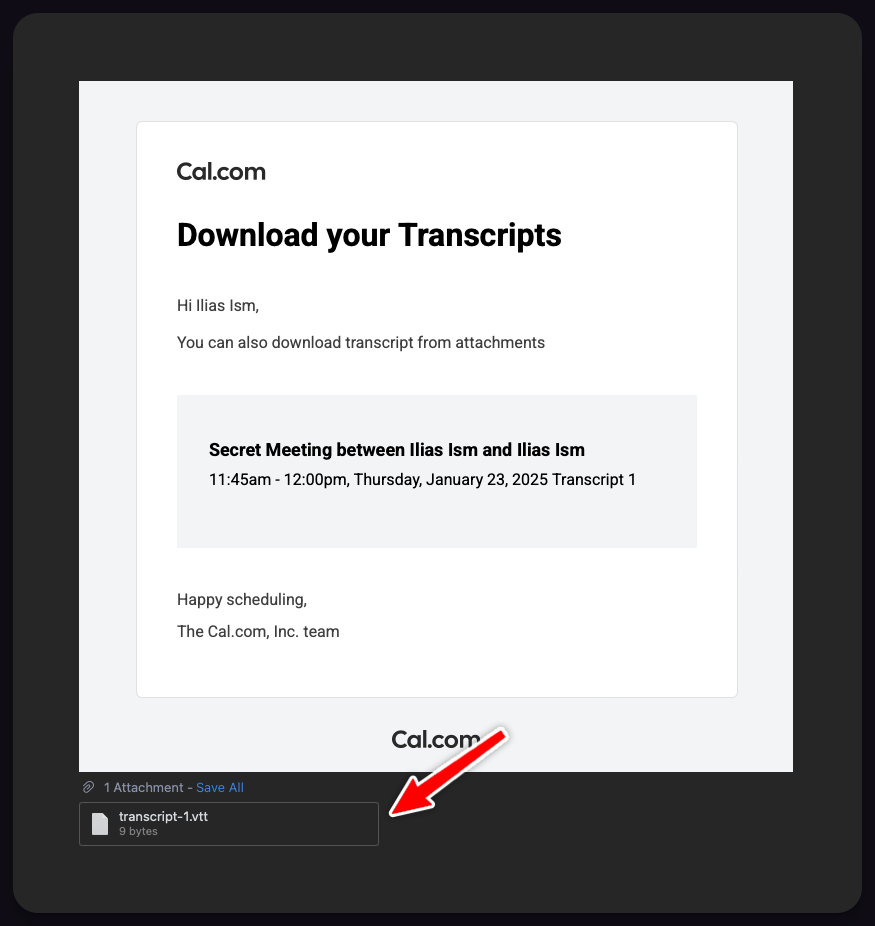
With Cal AI turned on, a transcript file comes along with it.
Fathom (if you want zero setup)
Don't want to shuffle files around? Fathom handles step one by itself. It joins the call on Zoom, Meet or Teams, records, transcribes, and has a summary waiting when you hang up.
The free plan covers unlimited recordings and transcripts. Premium ($20/mo, or $16/mo billed yearly) adds better summaries, AI action items and a chat assistant across your calls. Team plans start at $19 per user ($15 yearly) with a two-user minimum.
Descript
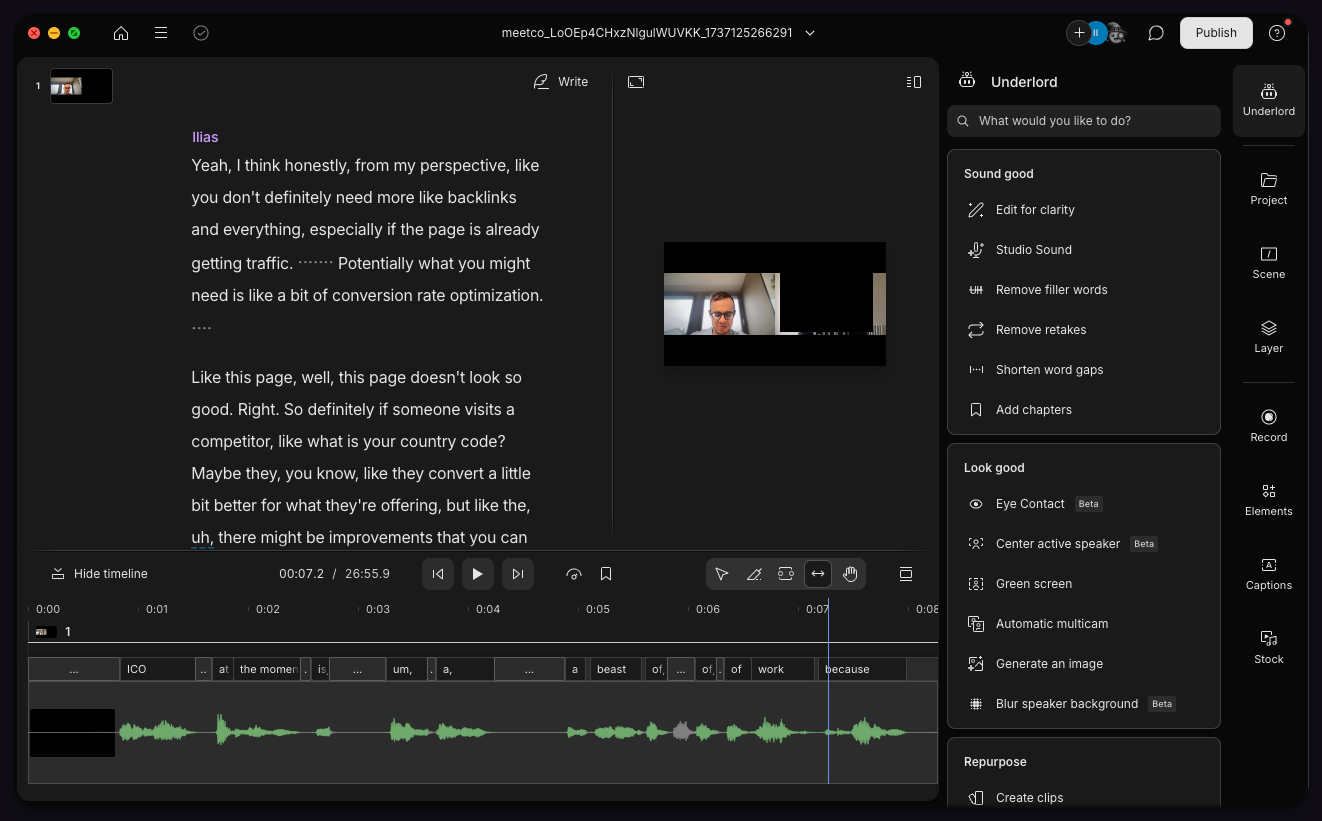
Meet and Cal.com give you a basic transcript. When I want a cleaner one, I upload the recording to Descript.
- Accuracy: it tends to get accents and technical terms right more often than Meet does.
- Speakers: it detects and labels each speaker, so you can follow who said what.
- Editing: you fix the transcript like a doc and strip filler words.
- Languages: transcription works in 25 languages.
Descript's free plan includes 60 media minutes a month, enough for one long call. Hobbyist ($16 a month billed yearly, more if you pay monthly) raises that to 10 hours.
2. AI sales call summary with Google AI Studio (Gemini)
With a transcript in hand (from Meet, Fathom or Descript), I paste it into Google AI Studio. It runs Google's Gemini models and has a free tier. Google may use free-tier content to improve its products, so think twice before pasting anything under NDA.
- Paste the transcript into a new chat.
- Prompt: "Please summarize this sales call transcript. List the key discussion points, the client's needs, and the next steps we agreed on."
- Read it and fix anything it got wrong.
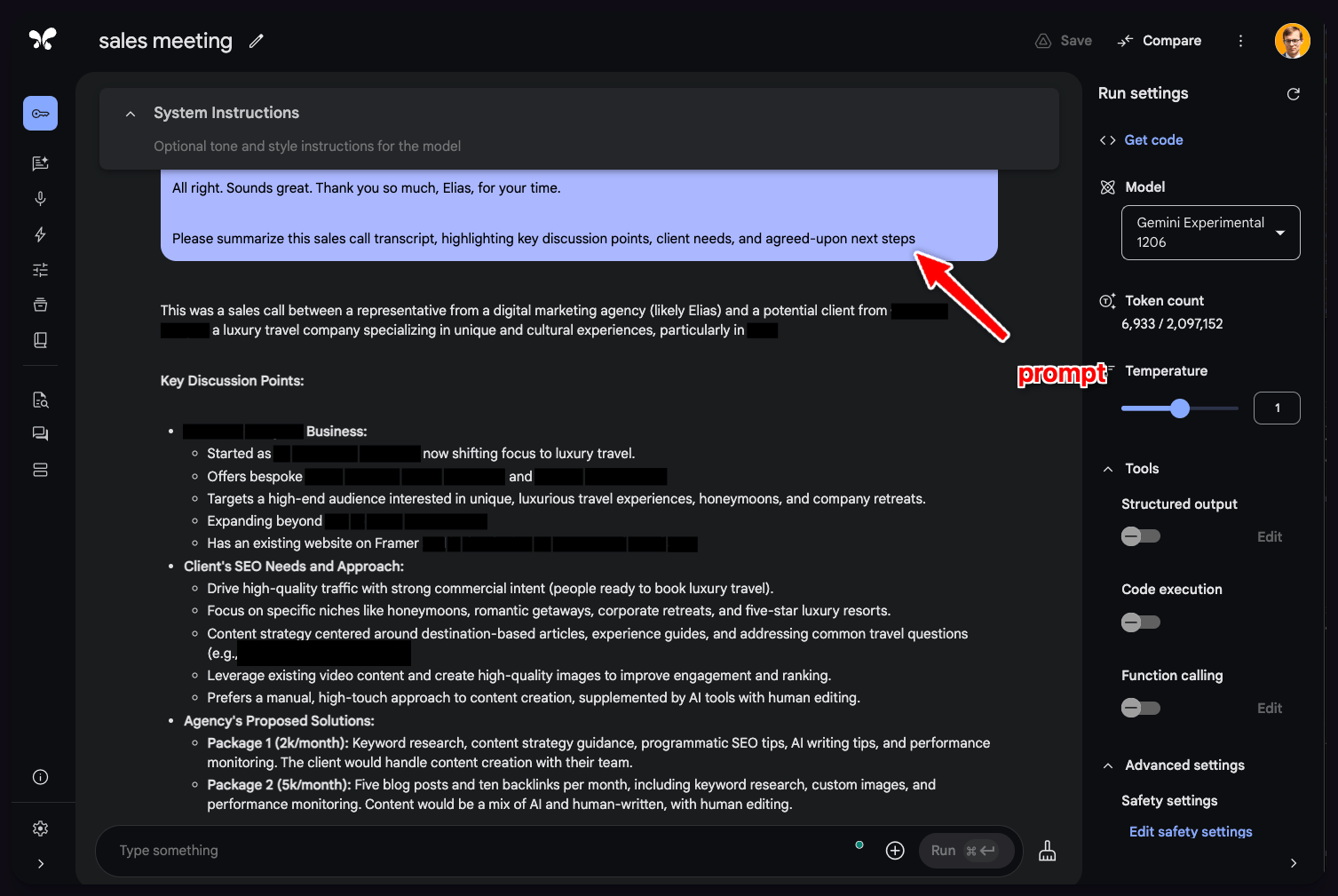
The summary is usually good enough to keep. I tweak a line or two.
3. Using AI to write sales offers and emails
Next comes the follow-up. I feed the call summary back into Google AI Studio with this prompt:
"Based on this sales call summary, write a simple offer using what I said and what the client wants. Keep it concise, no adjectives, offer pricing, set clear goals and targets."
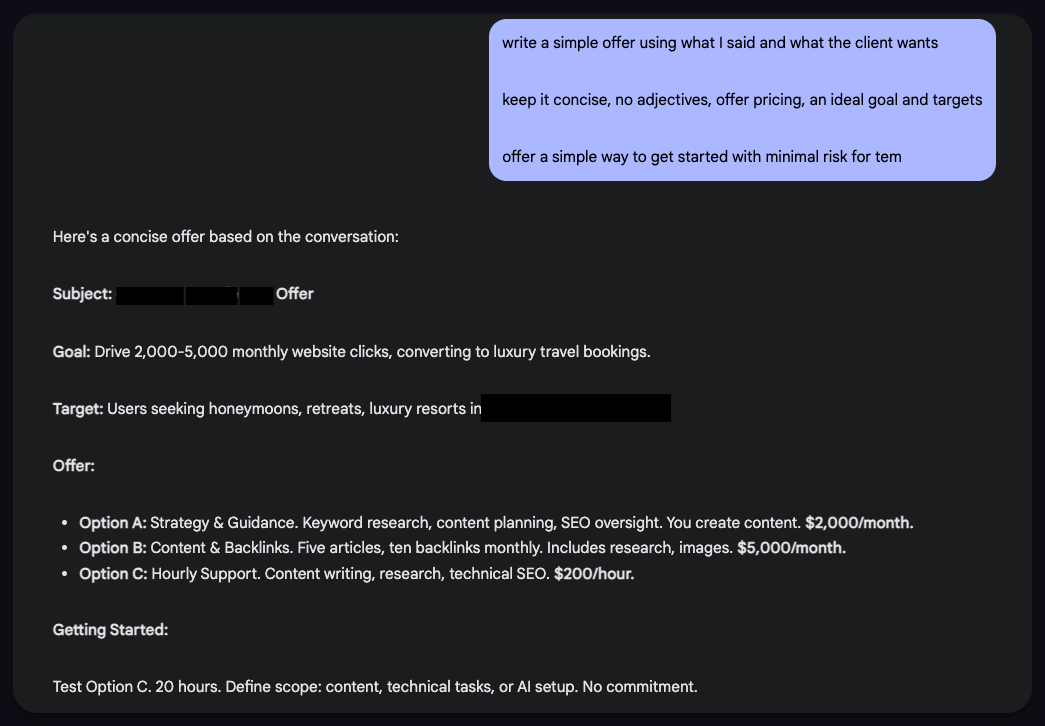
The draft comes back with:
- the price I quoted this client
- the goals and targets we agreed on
- the next steps to get started
- small details from the call I would have dropped
I used to write proposals from memory and miss half of this. Now the draft uses what I actually said, in seconds. I still read it and adjust the tone before it goes out. Buyers notice raw model copy, and so do detectors: in my AI content detector test, the most accurate tools scored unedited Claude and GPT text at 92 to 100% AI.
Sending a deck instead of an email? An AI presentation maker turns the same summary into slides.
4. Self-analysis and improvement
This is the most useful step. I give the AI the transcript and ask it to grade me.
Prompt:
"Analyze this sales call transcript. Identify 3 things I did well and 3 areas where I could improve my communication or sales approach. Provide specific examples from the transcript."
Here's what one of those answers looks like:
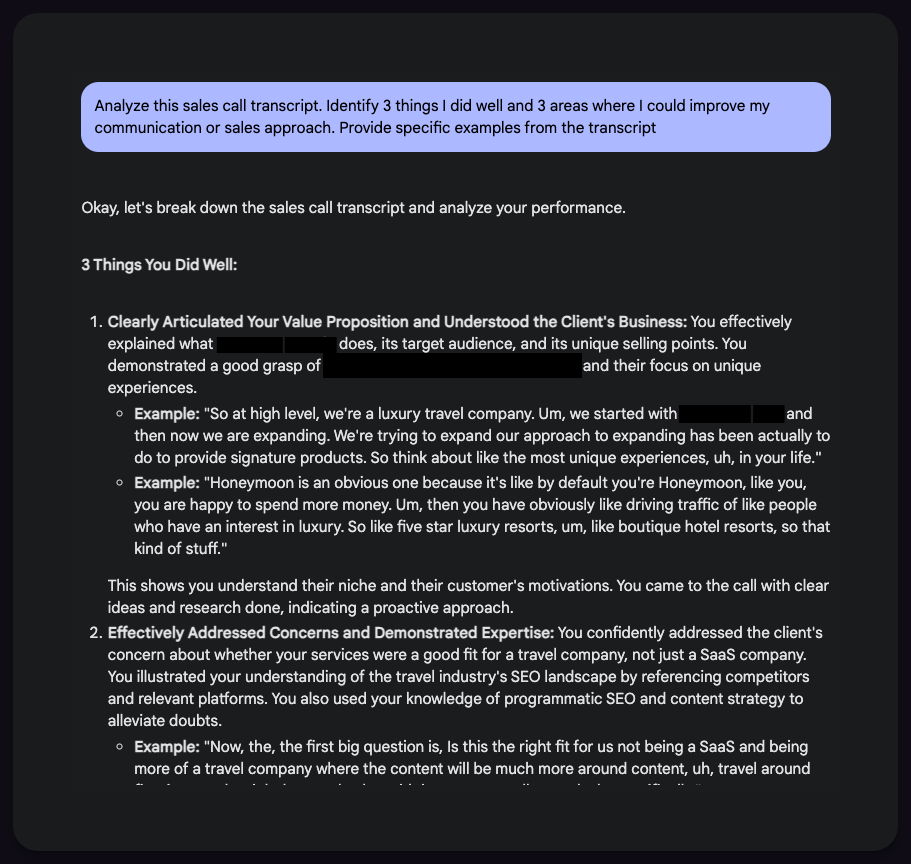
It points at real quotes, which makes the feedback hard to argue with. Over a few calls you start to see your own patterns: the question you always forget, the moment you start talking too much.
Why this workflow works
- Nothing gets lost. Every call is recorded and searchable, so you can check exactly what was promised.
- No more mixed-up clients. Each call has its own summary.
- You get feedback after every call, not once a quarter.
- Proposals match the call. Quotes, requirements and budget come straight from the transcript.
- Handoffs are easy. A teammate can read the summary instead of sitting through an hour of video.
After a call closes, the next question is support. AI chatbots for business can answer the routine tickets, and an AI video summarizer does for recorded demos and webinars what AI Studio does for transcripts.
Conclusion

Record the call, get a transcript, let Gemini summarize it, write the offer from the summary, then ask for feedback. Meet transcripts need a paid Workspace plan; Fathom's free plan covers you without one.
Start with your next call. Book it through Cal.com, record it on Meet or let Fathom join, and paste the transcript into AI Studio when you hang up.