
This morning my dashboard told me GenPPT revenue was down 16%.
So I did what I'd do for a MagicSpace SEO client: pulled 90 days of attribution, broke it down by channel, page, and plan tier. And I found something embarrassing.
My best revenue month ever was mostly someone else's blog post.
The $18,000 listicle I didn't write
In December, StoryChief published a listicle: Best AI Presentation Makers. It ranked on Google through January and February and sent about 18,000 visitors to GenPPT.
Those visitors converted at 11.9%. That's more than double my Google organic rate at 4.7%, and six times my direct traffic at 1.9%. Hundreds of paying customers came from one article on a domain I do not own.
Then their post slipped off page one. Referrals decayed 95%. And my "revenue drop" was mostly that.
Here's the part that stings: I never saw it happen, because the page was never mine. My analytics, my rank tracker, my AI visibility tracker, every detection tool I own was blind to the single highest-converting asset in my funnel.
I had even rewritten that StoryChief article earlier, which makes the loop more painful. I touched the asset. It helped drive the revenue. Then I still had no clean output system to defend it, expand it, or turn the finding into the next 20 placements.
That broke something open for me.
Detection doesn't pay. Production does.
I run a portfolio of products, which means I'm accidentally running a controlled experiment on what people actually pay for:
| Tool | What it does | Revenue |
|---|---|---|
| AI SEO Tracker | Detects: tracks your AI search visibility | ~$200/mo |
| LinkDR | Detects and places the links | Low five figures/mo |
| GenPPT | Produces: turns a prompt into a finished deck | ~$10,000/mo |
Same founder. Same distribution playbook. Same market. A 100x revenue gap.
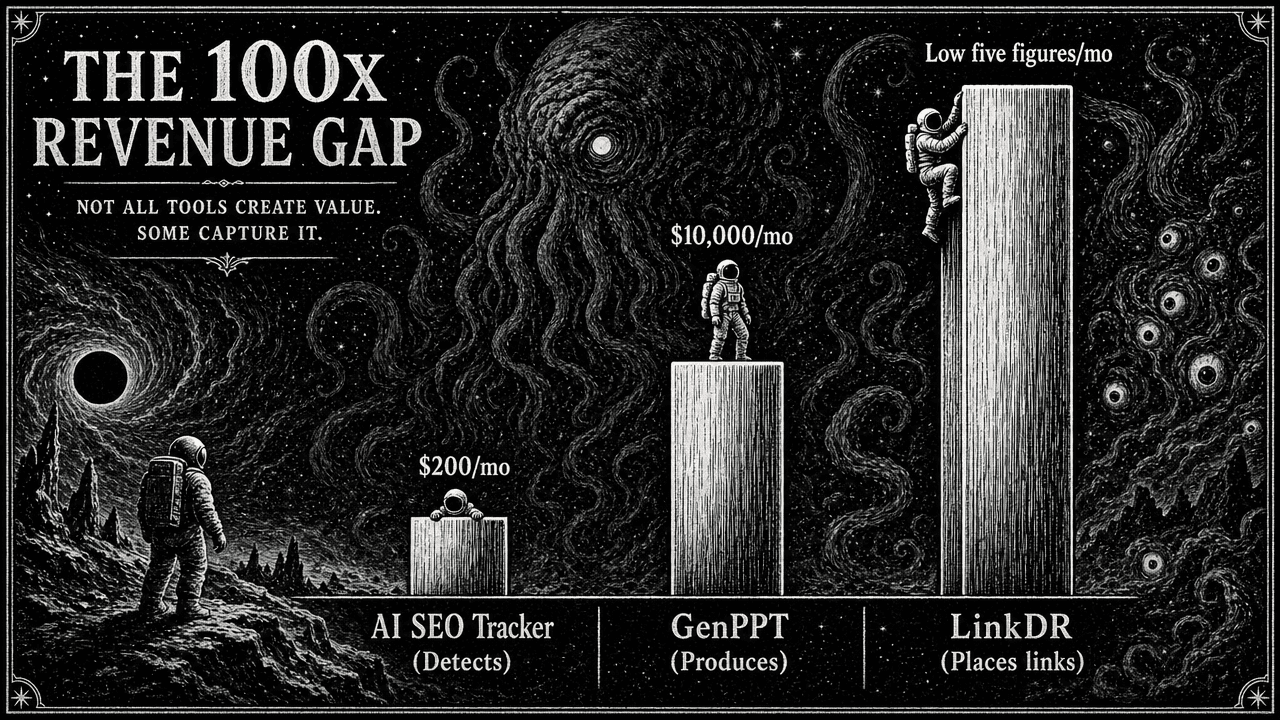
The pattern is brutal once you see it. AI SEO Tracker gives you a beautiful list of where ChatGPT mentions you and where it does not. Then you go do the work somewhere else.
LinkDR finds link opportunities too, but it also gets the link placed. That's the entire difference. The one detection tool in my portfolio that makes real money is the one that ends with something existing that did not exist before.
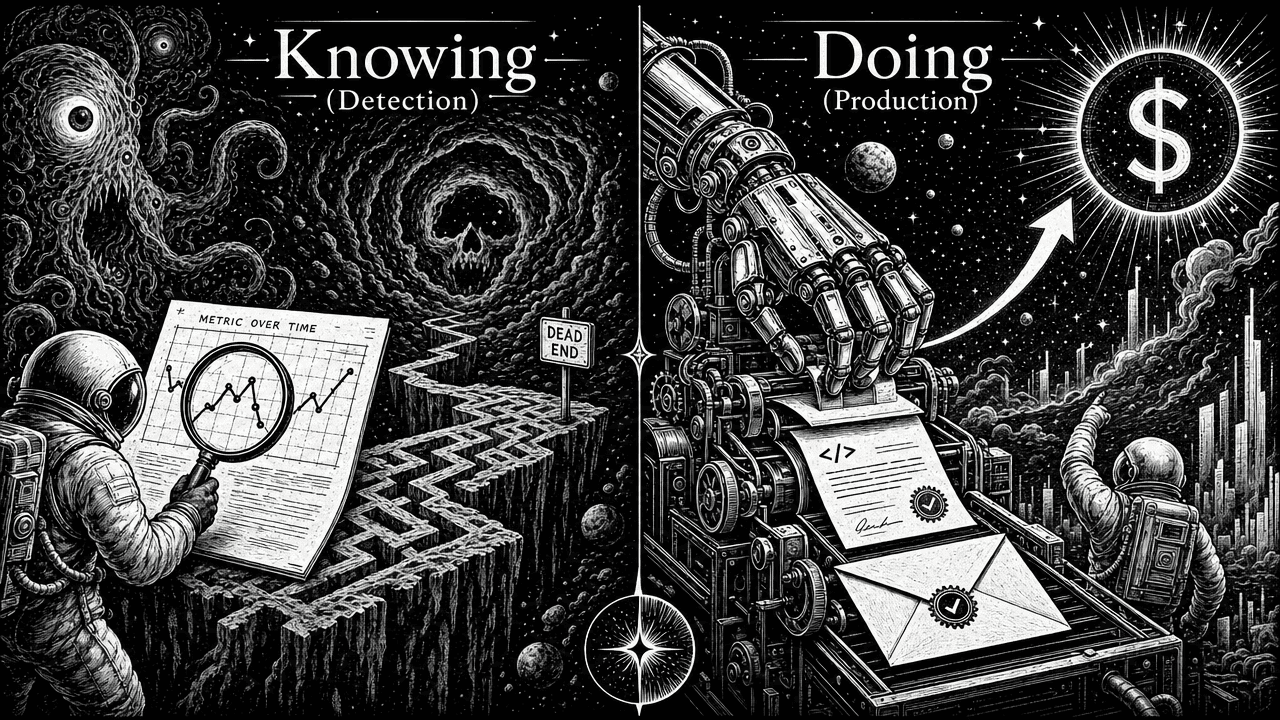
People do not pay to know. They pay for the thing to exist.
AI made knowing free
Five years ago, a good audit was worth $5,000 because finding the problems was hard.
Today any decent agent can crawl your site, pull your rankings, diff you against competitors, and produce a better audit than most agencies for about $0.50 of tokens.
Detection is becoming a commodity. Every insights dashboard, every tracker, every audit tool is now competing with a ChatGPT prompt.
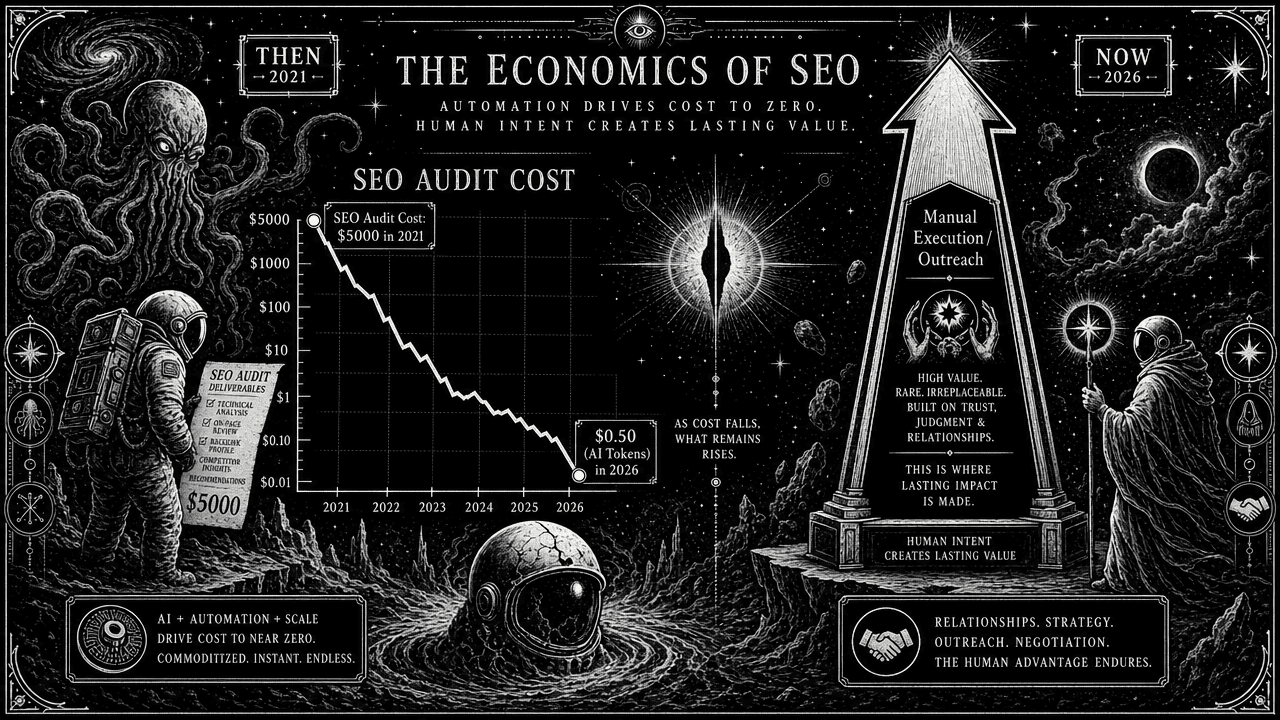
But look at what's still expensive, still manual, still the bottleneck in every growth playbook I run:
- The insertion email actually sent to the author ranking #7 for your money keyword
- The comment actually posted in the Reddit thread sitting at #3 on Google
- The listicle actually published on your own domain
- The creator outreach actually delivered to the YouTuber whose comparison video got 39k views
- The LinkedIn post, the video script, the image, the deck: made
Outputs.
The bottleneck moved from knowing to shipping, and almost every tool in my industry is still selling knowing.
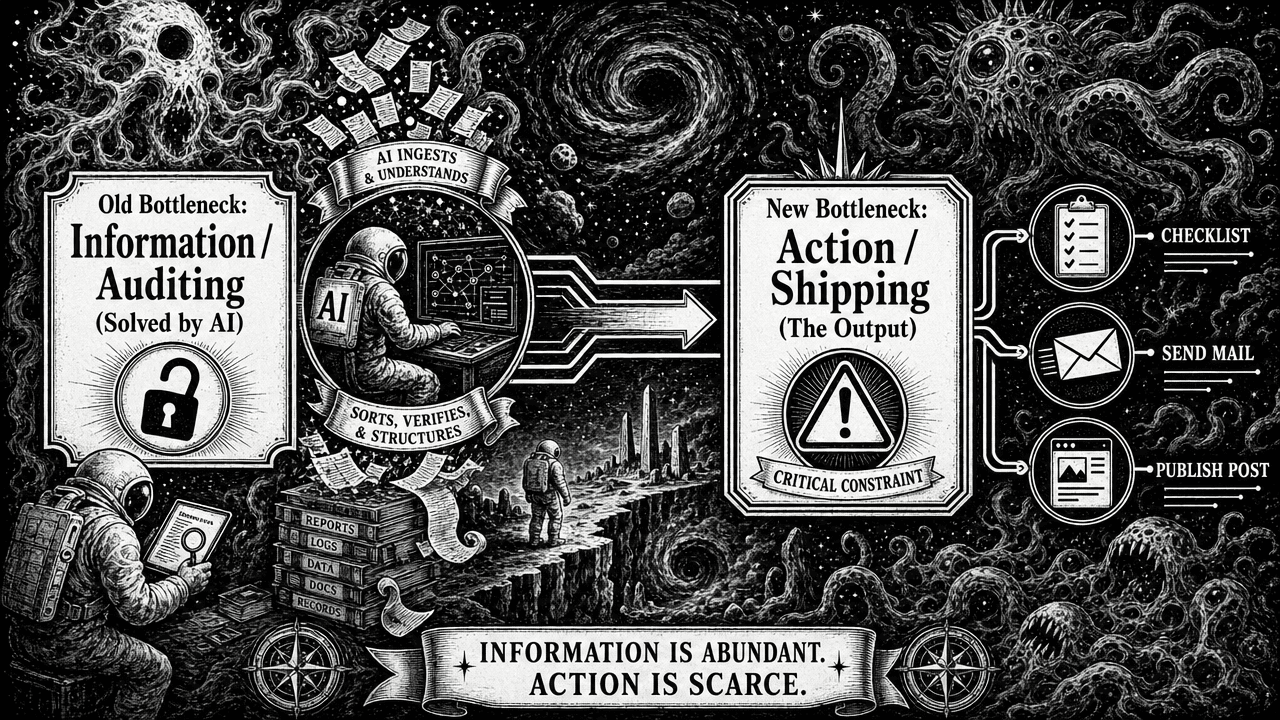
What I'm doing about it
This morning I ran LinkDR research on best ai presentation maker, the exact keyword that StoryChief listicle ranked for.
99 results. 58 contact emails auto-extracted. Reddit threads at position #3. YouTube reviews from three weeks ago. An AI Overview citing my competitors.
The old version of this page is a report. You read it, nod, and the work still has not started.
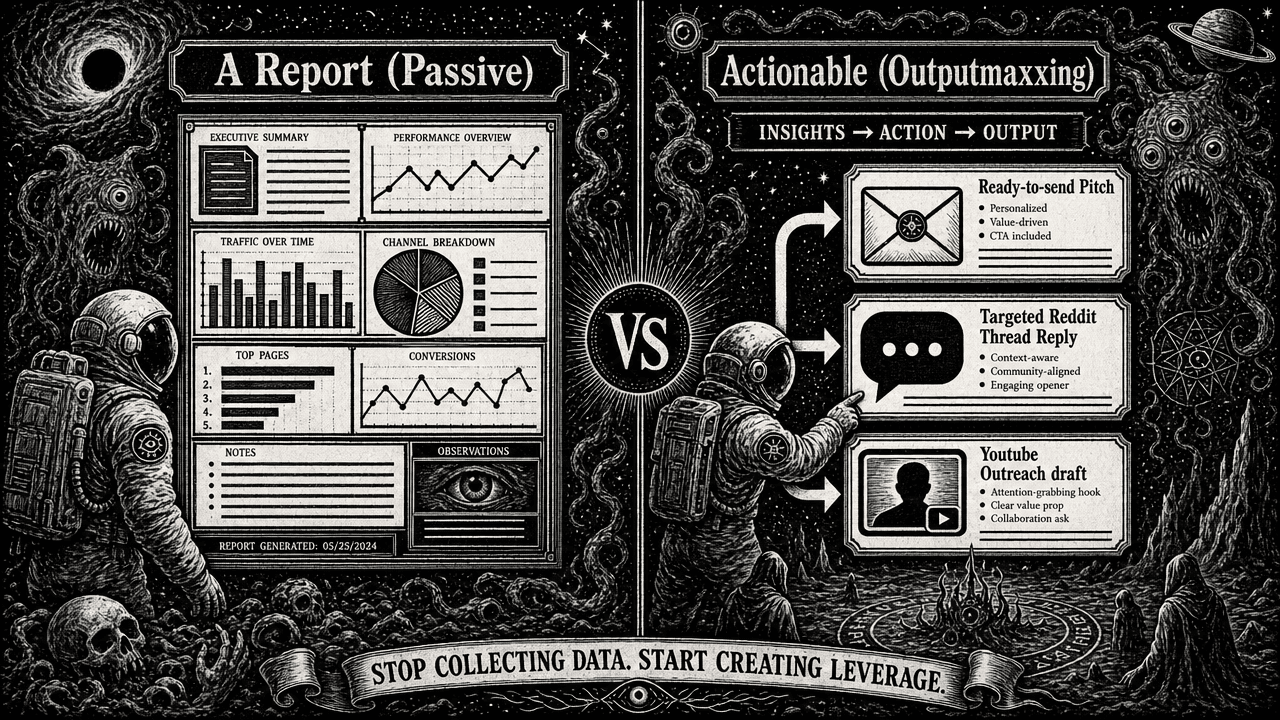
The new version we're building: every result gets an action.
The listicle gets Write insertion email. Contact attached. Pitch drafted. Personalized to what their list already covers, including the dead tools they're still recommending.
The Reddit thread gets Write comment. In the voice of the subreddit. Honest trade-offs. Your tool mentioned once like a human would.
The YouTube review gets creator outreach.
V1 generates the prompt and you fire it with one click. V2 executes through MCP connectors: agents with hands, not dashboards.
And the loop closes across the portfolio:
- AI SEO Tracker detects you're missing from the eight listicles ChatGPT cites for your category.
- LinkDR drafts and sends eight pitches with contacts already found.
- The tracker verifies when the citation appears.
Detection feeds production. Production feeds verification.
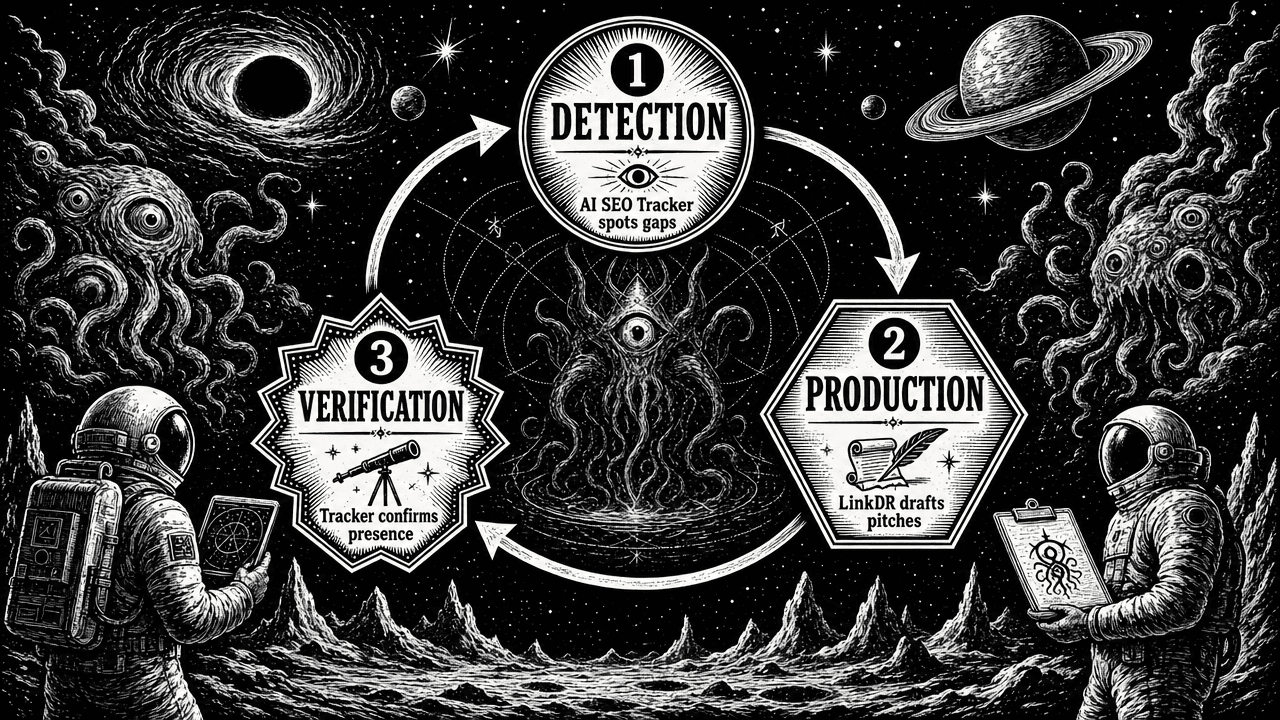
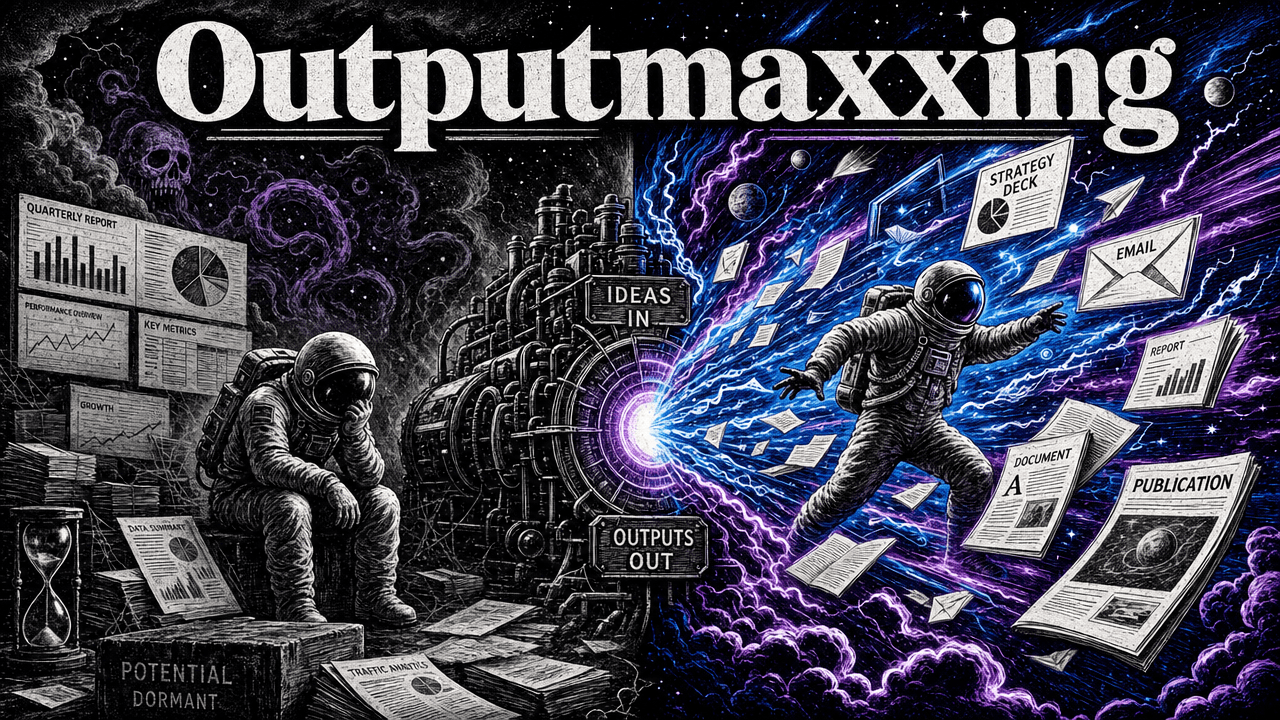
I'm calling the principle outputmaxxing, and it's now the bar for everything I build.
The outputmaxxing test
One question:
After someone uses your tool, what exists that didn't exist before?
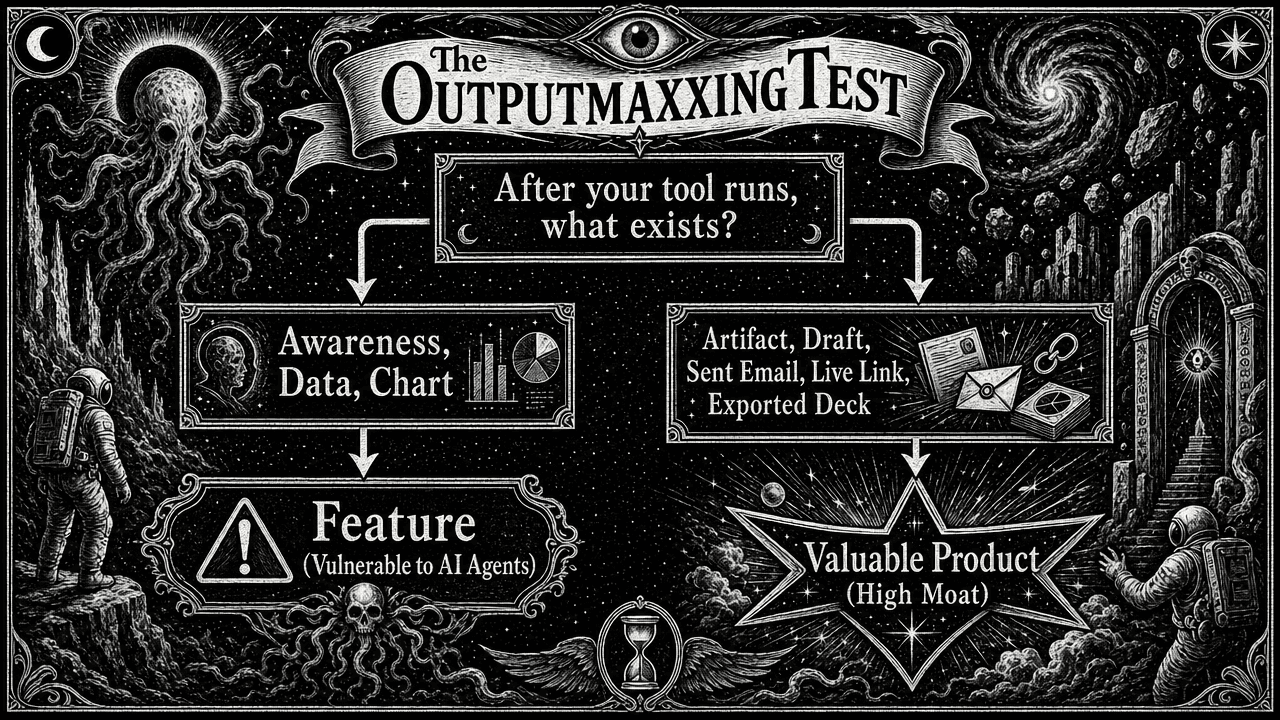
If the answer is "a decision" or "awareness", you built a feature, and an agent will eat it.
If the answer is an artifact, an email sent, a post published, a link placed, a deck exported, you built something people will pay for, because you collapsed the distance between knowing and done.
The irony isn't lost on me: I learned this from a blog post I didn't write, ranking for a keyword I should have owned, converting customers I almost lost.
The fix wasn't another dashboard.
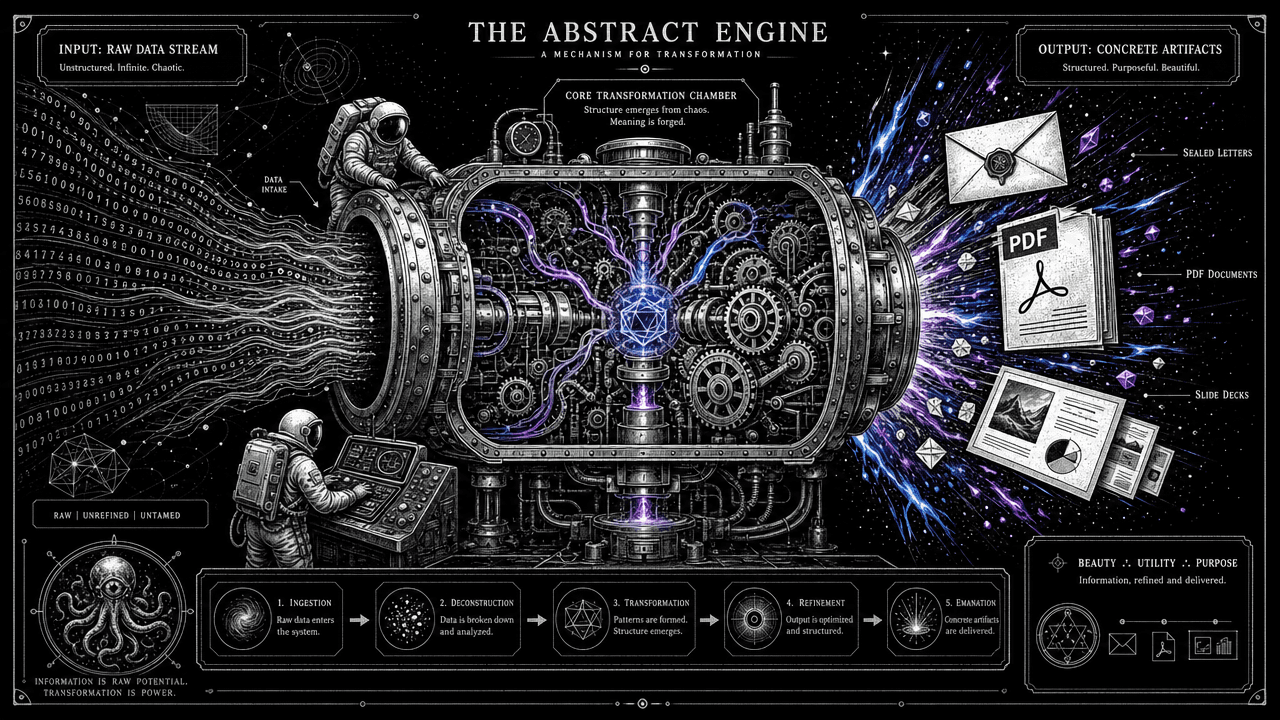
It was an output.
Like this one.
I'm Ilias Ism. I build LinkDR, GenPPT, and AI SEO Tracker, and document the playbook as I go. Follow along on Twitter/X.