

Everyone and their PM wants “a Chrome extension” until they ship something that fights with permissions, gets buried in the Web Store, and dies next to forty-seven identical Kanban overlays.
The upside hasn’t changed: distribution is one click, billing can be stupidly simple, and if you solve a job people hit every day in the browser, they’ll tolerate a monthly fee that wouldn’t fly for yet another Notion template.
This isn’t a dump of “idea #9: productivity.” Below are 17 builds with a sharper thesis—who pulls out a card, what pain you’re shortcutting, and why the Chrome aisle isn’t already full of the same thing.
If you want the safety-first angle first, read how extensions fit into a sane setup for locking down browsing with a VPN.
- Chrome still wins on distribution: one install from the page where the pain happens.
- The best ideas pin a recurring browser ritual—not a feature parity contest with Notion.
- Charge for outcomes (fewer mistakes, faster approvals, cleaner invoices), not “AI-powered dashboards.”
- Permissions are part of the product story; the narrower the scope, the easier the trust.
- Most abandoned extensions died from onboarding friction, not missing features.
Quick gut-check before you code: Can someone explain what it does in 12 words without saying “streamline” or “leverage”? Does it earn money from someone who already pays for adjacent tools? If both answers are shaky, keep scrolling—the list below is long enough.
Dev brains & messy repos
These hit engineers where they already live: tabs full of diffs, docs, and “temporary” env vars.
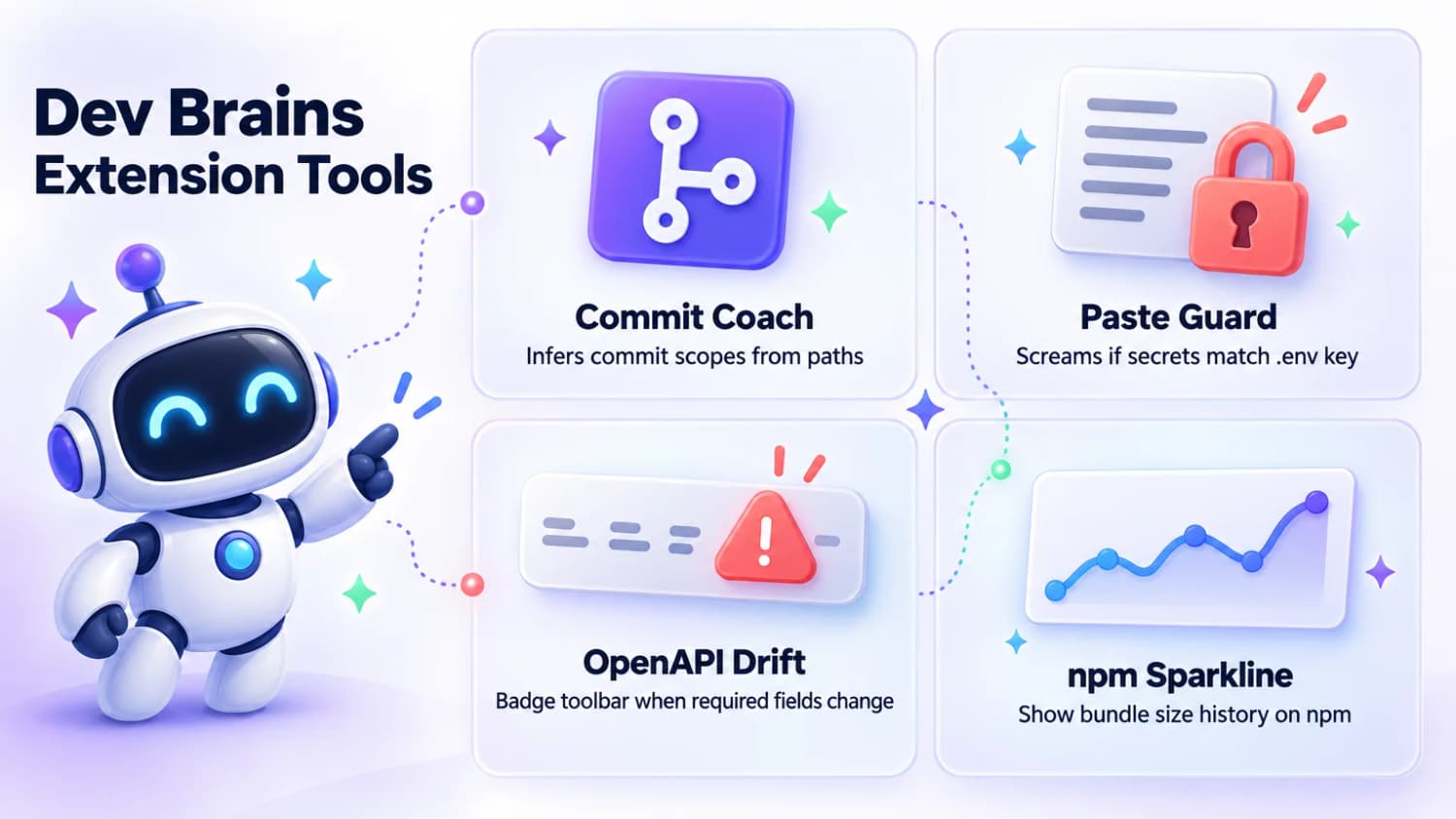
- Commit coach from the diff tab — Reads the visible GitHub/GitLab diff (no repo clone) and suggests three conventional-commit messages with scopes inferred from paths. Buyer: indie devs and agency engineers billing hourly who hate the blank commit box.
- Paste guard for secrets — Watches textareas on GitHub issues, Slack threads you whitelist, and support portals; screams if pasted content matches
.envkey patterns or PEM blocks before send. Buyer: anyone who’s screenshot-posted a secret once and still flinches. - OpenAPI drift radar — Pin an OpenAPI/Swagger JSON URL; badge the toolbar when
pathsor required fields change versus yesterday’s snapshot, with a readable diff panel. Buyer: platform teams integrating brittle partner APIs. - npm bundle sparkline — On each npm package page, pull bundle size history into a tiny inline sparkline (credit
bundlephobiaor your own worker). Buyer: frontend leads choosing dependencies under bundle budgets.
Marketers who ship ugly drafts
You’re not competing with HubSpot. You’re competing with embarrassment.
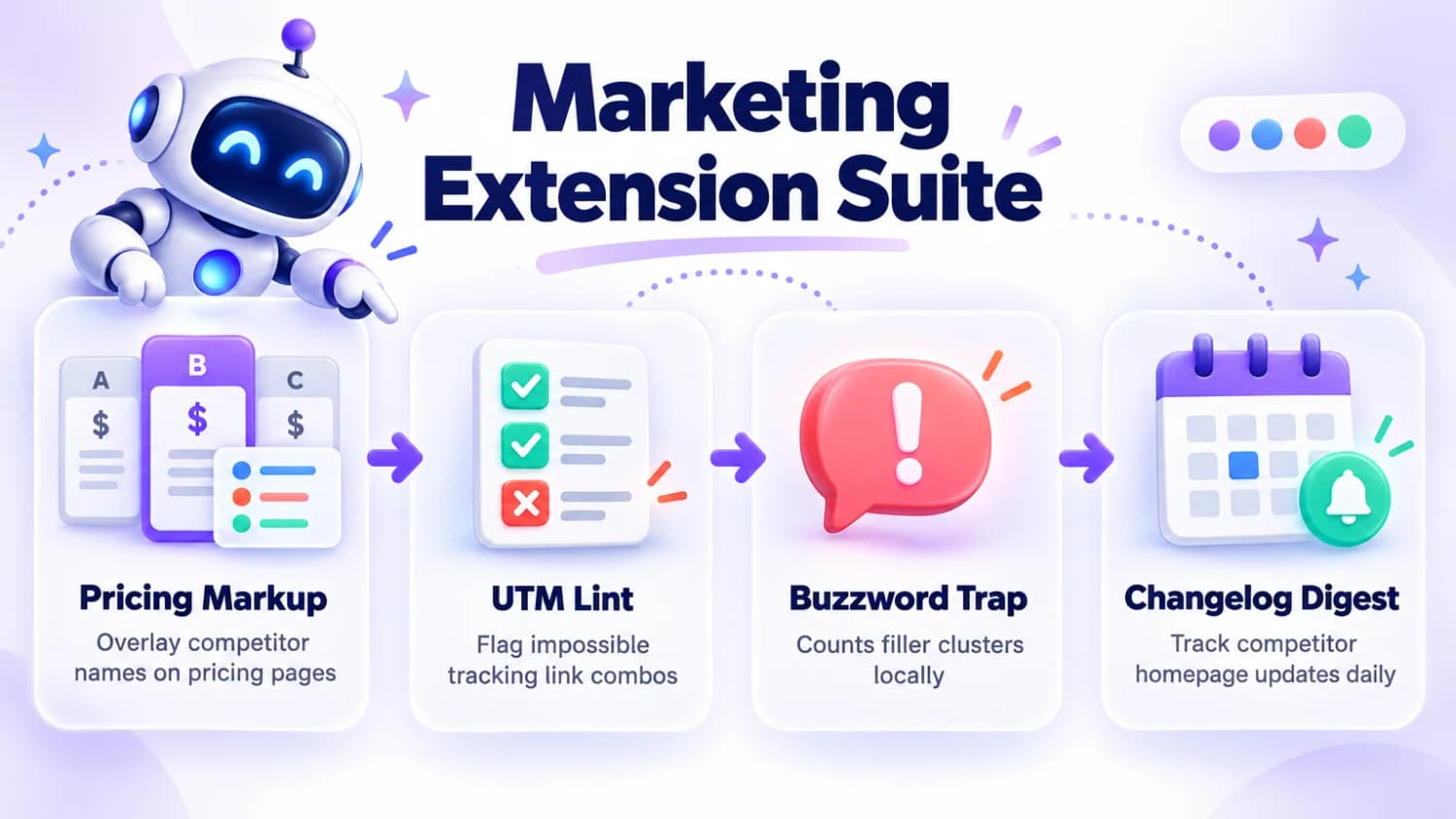
- Pricing-table markup mode — Overlay arrows, callouts, and competitor names on any SaaS pricing page; export a PNG sized for slides or Notion. Buyer: founder-led sales decks cobbled at 11pm.
- UTM sanity lint — When Google Ads / Meta / LinkedIn export sheets open in Sheets-on-web, flag impossible combos (
utm_sourcemissing whileutm_campaignexists), duplicate encoding, or mixed case before someone uploads garbage to GA4. Buyer: growth folks who’ve blamed “tracking” when the URL was just wrong. - Buzzword trap for LinkedIn — Local-only scan of the composer: counts filler clusters (“synergistic,” “thought leadership,” “excited to announce”), suggests tighter verbs. Buyer: operators who want posts that sound human without hiring an editor.
- Competitor changelog digest — Track five competitor URLs (blog,
/changelog, status pages); one daily badge summarizing what moved—pricing tone, enterprise toggle, hero headline. Buyer: PMMs who manually refresh rival sites like it’s a hobby.
Money, invoices, and SaaS creep
Spreadsheet people pay when you spare them copy-paste hell.
- Invoice table lift — On Stripe/Paddle hosted receipts or PDF.js viewers, draw a rectangle → CSV with date, line items, tax split. Buyer: freelancers feeding accountants quarterly.
- Receipt paste → burn sketch — No Gmail scopes at v1: user pastes plaintext receipts or CSV exports; extension normalizes into rough monthly SaaS burn with renewal dates surfaced. Buyer: founders who “will clean up expenses later” for three years.
- QA autofill leak detector — Before submit on staging forms, highlights fields Chrome autofilled with
test@,asdf, or prod-looking cards. Buyer: small teams without a dedicated QA hire.
Specialists who’ll pay real money for narrow wins
These are smaller audiences, but they feel pain in dollars, not vibes.
- WCAG contrast probe — Hover any element; show contrast vs computed background with copy-pasteable failing hex pairs for designers filing bugs. Buyer: agencies billing accessibility audits.
- Shopify CLS whisper — On theme preview URLs, surface suspected layout-shift offenders from a lightweight PerformanceObserver overlay merchants can read without opening DevTools. Buyer: merchants blaming “the theme” while images load lazy-wrong.
- Research thread exporter — On X/Twitter threads, strip promoted junk footers, collapse noise replies optionally, export clean Markdown for Notion/Obsidian. Buyer: journalists and analysts hoarding primary sources.
Petty UX wins that quietly save careers
Small surfaces, loud relief—especially when money or dignity is on the line.
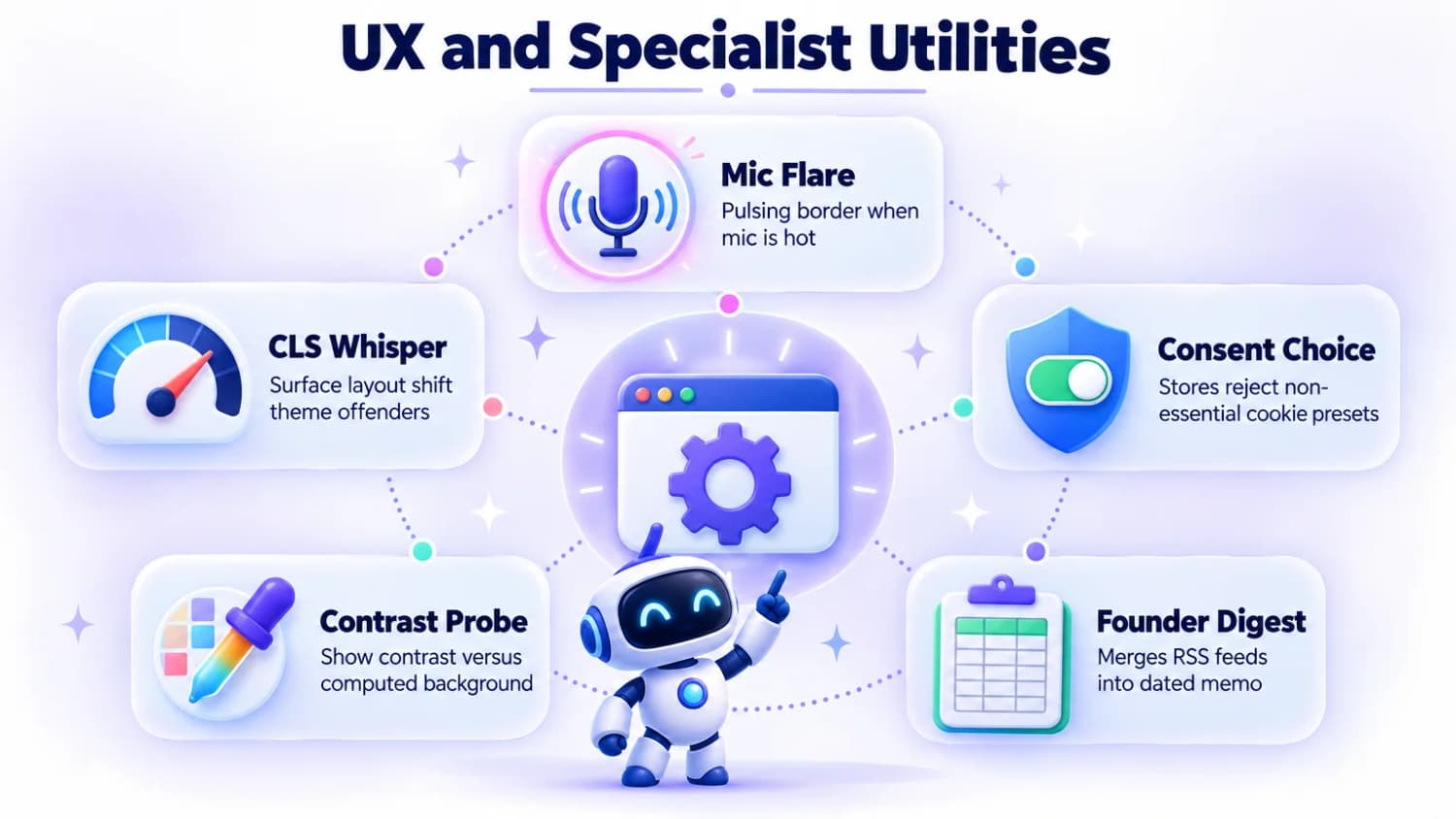
- Screenshare mic flare — Pulsing border on the Meet or Zoom tab whenever your mic is hot, so you quit rehearsing the “sorry, I was muted” bit. Buyer: founders and CS folks who live on calls.
- Consent choices that stick — Stores “reject non-essential” (or whatever preset you pick) per registrable domain and reapplies it next visit without another guilt-trip modal marathon. Buyer: privacy people who still need the messy web to load.
- Founder digest clipboard — Merges a handful of RSS feeds + changelog URLs into one dated Markdown memo—tables flattened, links normalized—for Slack or a terse investor update. Buyer: solo operators pretending they’ll “organize competitor intel later.”
The part nobody wants to hear
Most extensions lose because the first-run story is mush: permissions feel greedy, value shows up on day four, and uninstall takes two clicks.
Pick one ritual—Friday invoicing, Monday changelog stalking, every deploy message—and make day-one undeniable. Charge after someone completes that ritual twice.
If you’re itching for more tooling rabbit holes after this, browse tech posts or go touch grass; both are valid exits.