


Location-based SEO boosts local visibility in "near me" searches. Optimize Google Business Profile, website, and directories to drive local customers to your business. Track with Analytics & scale with programmatic SEO.
Your ideal customer is just around the corner, searching online.
They're looking for businesses exactly like yours, right in your local area.
But here's the question every local business owner needs to ask: are they finding you?
Location-based SEO is the answer – it's the key to making sure your business becomes that visible, local solution.
In this guide, we'll explore how to master location-based SEO, turning those local online searches into real customers walking through your door.
What is Location-Based SEO?
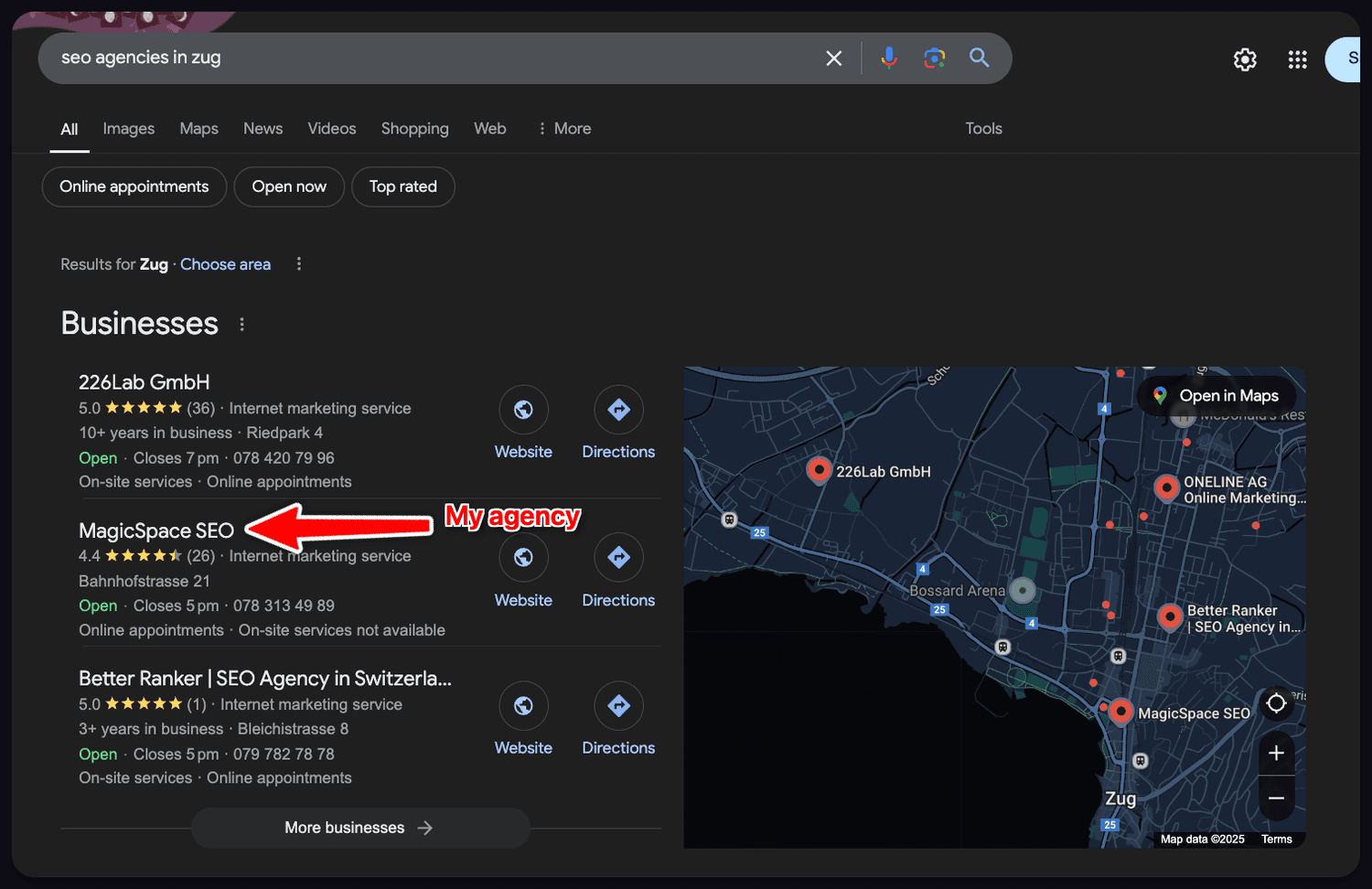
Location-based SEO, also known as local SEO, is the practice of optimizing your online presence to appear in local search results like the ones shown in the Google Maps interface above.
When someone searches for "SEO agencies in Zug" or similar local queries, businesses optimized for location-based SEO will appear prominently on the map with their business listings, reviews, and key information displayed.
![Example of location-based search results showing 'Best SEO Agency in [CITY]' with URLs for Basel, Zurich, Lugano, St. Gallen and Lucerne](/_next/image?url=%2Fblog%2Fbest-seo-agency-in-city-pseo.png&w=1500&q=75 "Location-based search results for SEO agencies across Swiss cities")
For example, when someone searches for "best SEO agency in [city]" as shown above, they'll see results specifically tailored to locations like:
- Basel
- Zurich
- Lugano
- St. Gallen
- Lucerne
Each result is optimized to match the searcher's location intent, with city-specific landing pages and local business information.
While similar in concept to programmatic SEO in its targeted approach, location-based SEO focuses specifically on geographical targeting rather than keyword variations.
The goal is to rank in both the map pack results (Google Maps) and organic listings (Google Search) when potential customers search for services in your area.
Just as programmatic SEO efficiently creates pages for diverse search queries, location-based SEO tailors your online presence to different locations - ensuring your business shows up with accurate NAP (Name, Address, Phone) information, proper Google Business Profile optimization, and location-specific content that helps you stand out in local search results.
Why Location-Based SEO Matters

Location-based SEO isn't just a buzzword; it's a powerful strategy that directly impacts your bottom line. Here's why it's crucial for businesses with physical locations or those serving specific regions, backed by real-world data:
- Local Searches Drive Immediate Action: A whopping 76% of people who conduct a local search on their smartphone visit a business within 24 hours (Google). This means local searches translate to real foot traffic and immediate sales.
- "Near Me" Searches Are Exploding: Searches containing "near me" have grown by over 900% in the past two years (Chatmeter). If you're not optimized for these searches, you're missing out on a massive wave of potential customers.
- Mobile-First World: 46% of all Google searches are seeking local information (Go Gulf). With the majority of searches happening on mobile devices, being visible in local results is essential for capturing on-the-go customers.
- Google Maps is the New Yellow Pages: 86% of people rely on Google Maps to find the location of a business (SEO Expert Brad). If your business isn't easily found on Google Maps, you're essentially invisible to a large portion of your potential customers. Ranking in the local pack dramatically increases your visibility and click-through rate.
- Reviews Matter More Than Ever: 97% of consumers lean on reviews to guide their purchase decisions (BrightLocal, Local Consumer Review Survey 2026).
- Beat the Competition: Many local businesses still haven't fully embraced location-based SEO. This presents a significant opportunity to outrank your competitors and capture a larger share of the local market.
In short: Location-based SEO is not just about being found online; it's about being found by the right people, at the right time, in the right place. It's about driving real-world results, from increased foot traffic to higher sales and a stronger local presence.
Don't miss out on revenue because of bad SEO, get an SEO audit today!
Location-Based Keyword Research
Keyword research is the foundation of any SEO strategy, and location-based SEO is no different.
The goal here is to identify the keywords your local customers are using when searching for your products or services. Here's how to conduct location-based keyword research using both paid and free tools:
Using Ahrefs for Location-Based Keyword Research
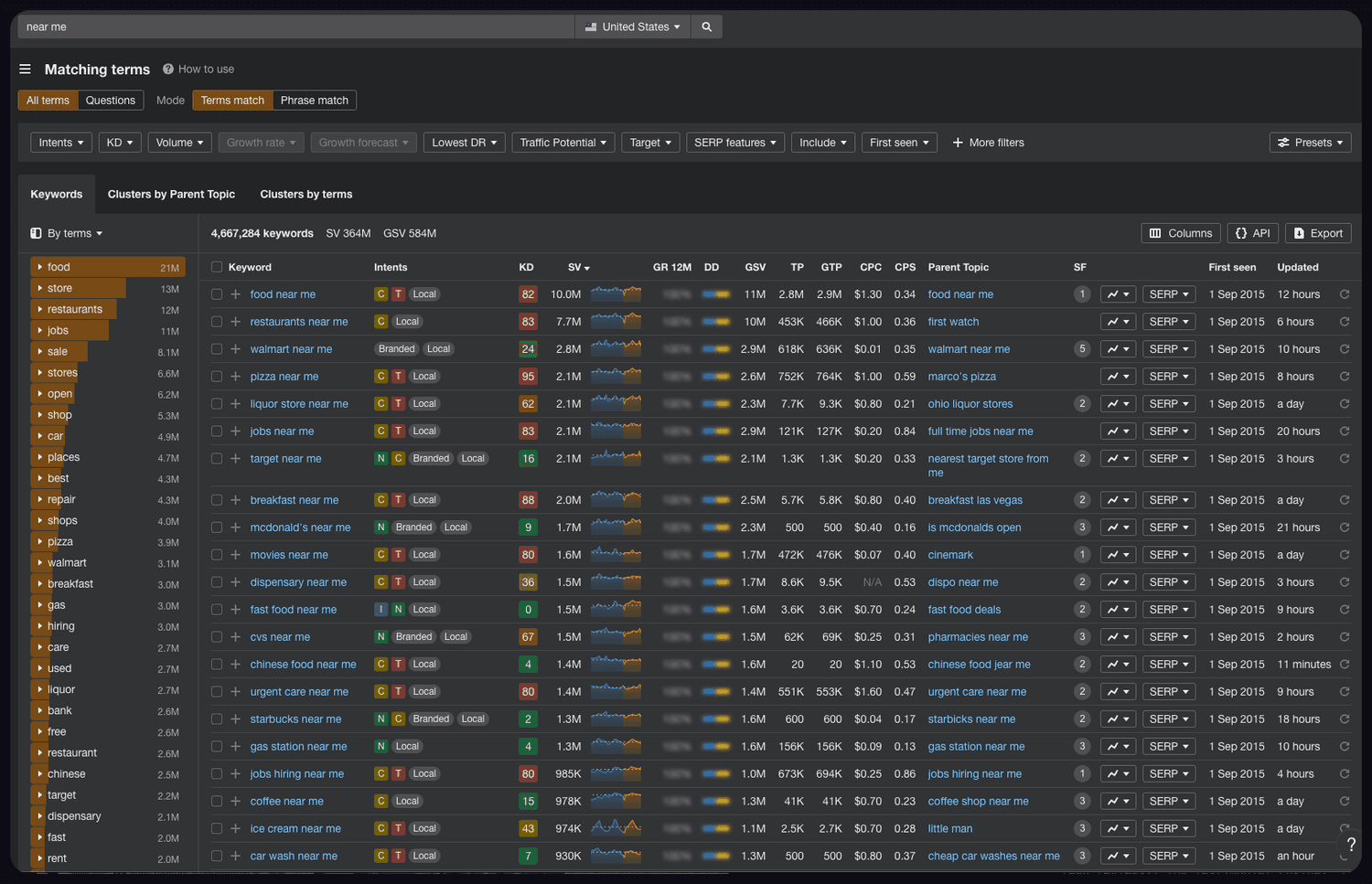
Here's a step-by-step guide to finding location-based keywords using Ahrefs:
-
Start with Core Terms:
- Enter your main service/product keyword (e.g., "dentist", "plumber", "restaurant")
- Add location modifiers like:
- City names: "dentist london"
- Neighborhoods: "dentist manhattan"
- "near me" variations: "dentist near me"
-
Analyze Search Volumes:
- Look at monthly search volume for each location variant
- Pay attention to the "Parent Topic" to find related terms
- Check "Also rank for" suggestions for additional location-based ideas
-
Review Keyword Difficulty:
- Local keywords often have lower KD scores
- Balance search volume with competition
- Look for opportunities where difficulty is manageable
-
Check SERP Features:
- Look for keywords triggering local packs
- Identify opportunities for featured snippets
- Note which terms show map results
Using Semrush for Location-Based Keyword Research
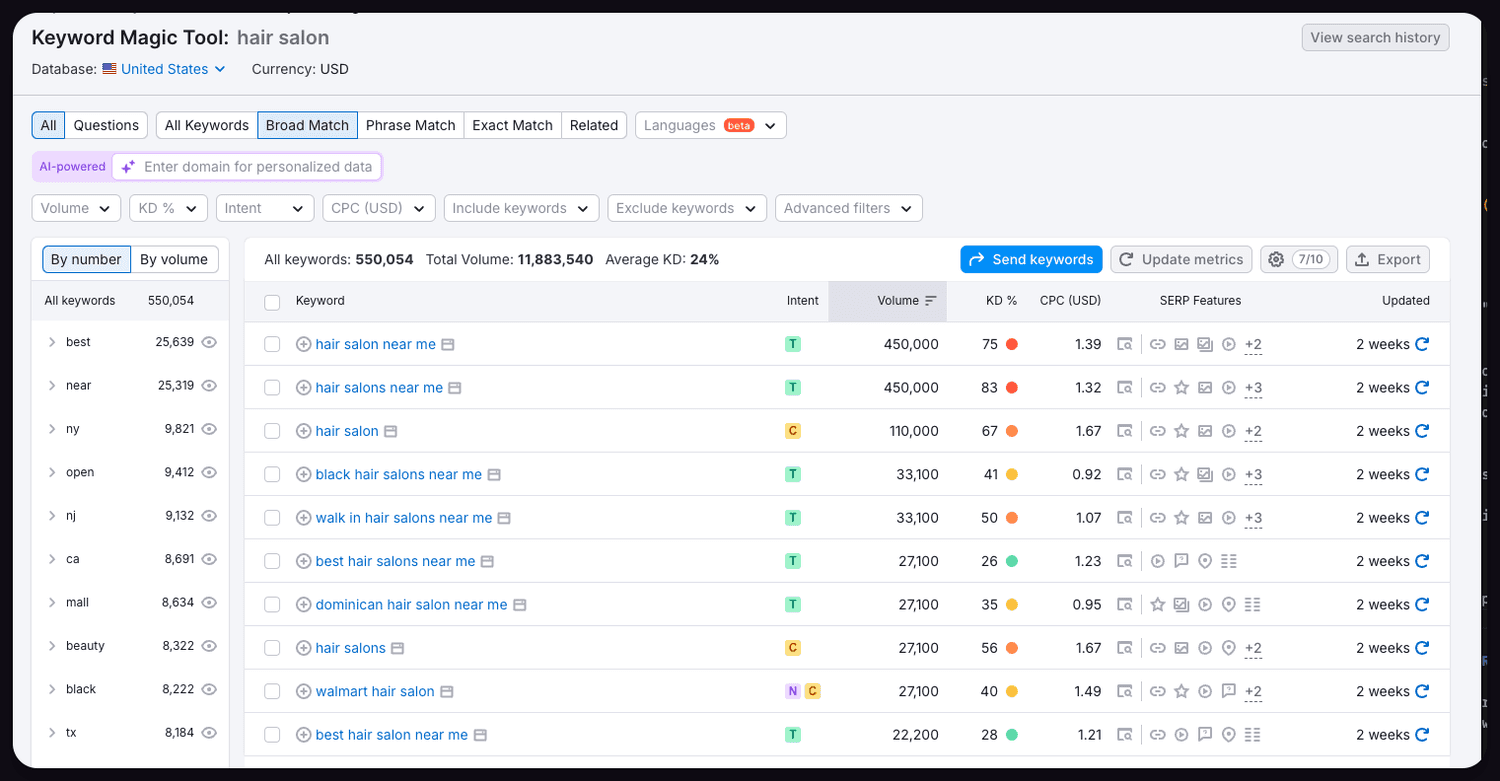
Here's how to use Semrush for location-based keyword research:
-
Access the Keyword Magic Tool:
- Enter your main keyword (e.g., "hair salon", "dentist", "pizza")
- Pick your target country database; city-level volume is in Keyword Overview
- Look for location-based modifiers in the suggestions
-
Analyze Keyword Metrics:
- Check monthly search volume for each location variant
- Review keyword difficulty scores
- Look at CPC data to gauge commercial intent
- Examine SERP features (local pack, map results)
-
Use Advanced Filters:
- Filter by questions to find local FAQ opportunities
- Use the "Include" filter to add location terms
- Group keywords by topic clusters
- Sort by volume or KD to find the best opportunities
-
Export and Analyze:
- Export your keyword list for further analysis
- Group keywords by search intent
- Identify patterns in local search behavior
- Create content plans based on findings
Free Tools for Location-Based Keyword Research
While paid tools like Ahrefs and Semrush offer extensive features, you can also start with free tools for location-based keyword research:
-
Google Keyword Planner:
- Google Keyword Planner is a free tool within Google Ads that can help you find keyword ideas and estimate search volume.
- While it's primarily for paid advertising, you can use it for organic keyword research too.
- Use location targeting within Keyword Planner to get data specific to your region.
-
Google Trends:
- Google Trends shows you the popularity of search terms over time and across different regions.
- Use it to identify trending keywords in your target location and understand seasonal search patterns.
-
Google Maps & Autocomplete:
- Start typing your primary keyword in Google Maps and observe the autocomplete suggestions. These are often popular local search queries.
On-Page Optimization for Location-Based SEO
Once you have your list of location-based keywords, the next step is to optimize your website's on-page elements:
Optimize Title Tags and Meta Descriptions
-
Include Location Keywords: Add your target city or region in your page titles and meta descriptions.
-
Relevance and Clarity: Ensure your titles and descriptions accurately reflect the page content and are compelling enough to attract clicks from local search results.
<title>Best Pizza in New York City | [Your Business Name]</title>
<meta
  name="description"
  content="Craving authentic New York style pizza? Visit [Your Business Name] in NYC for delicious slices and pies. Order online or dine-in!"
/>
Header Tags and Content Optimization
-
Use Location Keywords in Headers: Incorporate location keywords naturally in your H1, H2, and other header tags.
-
Location-Specific Content: Create content that is relevant to your local audience. This could include:
- Service area pages detailing the specific neighborhoods or cities you serve.
- Local guides or blog posts about your city or region, subtly mentioning your business where relevant.
- Case studies or testimonials from local customers.
<h1>[Your Business Name] - Your Local Plumber in Chicago</h1>
<h2>
  Serving Chicago and Surrounding Suburbs with Reliable Plumbing Services
</h2>
Implement Local Schema Markup
-
Schema.org Vocabulary: Use schema markup (specifically LocalBusiness schema) to provide search engines with structured data about your business, including your name, address, phone number, business hours, and services.
-
Location Information: Schema markup helps search engines understand your location and can make you eligible for business details in Search and Maps.
<script type="application/ld+json">
  {
    "@context": "https://schema.org",
    "@type": "LocalBusiness",
    "name": "[Your Business Name]",
    "address": {
      "@type": "PostalAddress",
      "streetAddress": "123 Main Street",
      "addressLocality": "New York",
      "addressRegion": "NY",
      "postalCode": "10001",
      "addressCountry": "US"
    },
    "telephone": "+1-212-555-1212",
    "openingHours": "Mo-Fr 09:00-17:00"
  }
</script>
NAP Citations: Name, Address, Phone Number
-
Consistency is Key: Ensure your business Name, Address, and Phone Number (NAP) are consistent across your website and all online listings.
-
Footer and Contact Page: Display your NAP information prominently in your website footer and on your contact page.
<footer>
  <p>[Your Business Name]</p>
  <p>123 Main Street, New York, NY 10001</p>
  <p>Phone: +1-212-555-1212</p>
</footer>
Off-Page Optimization: Building Local Citations and Backlinks
Off-page optimization for location-based SEO involves building your online authority and visibility outside of your website. This primarily focuses on local citations and backlinks:
Local Business Directories
- Claim and Optimize Listings: List your business in major online directories like Yelp, Bing Places for Business, Apple Maps, and industry-specific directories.
- Accurate and Complete Profiles: Ensure your listings are accurate, complete, and consistent with your website NAP information.
Industry-Specific Directories
- Niche Relevance: Identify and list your business in directories specific to your industry (e.g., for restaurants, list on OpenTable, Resy; for legal services, list on FindLaw, Avvo).
- Authority and Trust: These niche directories can provide valuable citations and backlinks from authoritative sources in your field.
Local Link Building Outreach
- Local Partnerships: Reach out to local businesses, community organizations, and bloggers for link building opportunities.
- Sponsorships and Events: Sponsor local events or charities and seek backlinks from their websites.
- Guest Blogging: Contribute guest posts to local blogs or news websites, including links back to your site.
Optimize Google Business Profile
- Complete and Accurate Profile: Your Google Business Profile (GBP) is crucial for local SEO. Ensure it's fully optimized with accurate information, including:
- Business name, address, phone number, website URL.
- Business category and attributes.
- High-quality photos and videos.
- Business description with location keywords.
- Regular posts about updates, offers, and events.
- Encourage Reviews: Positive Google reviews significantly impact local rankings. Encourage satisfied customers to leave reviews. Respond to reviews, both positive and negative, to show engagement and customer care.
Tracking and Measuring Location-Based SEO Performance
Monitoring your location-based SEO efforts is essential to understand what's working and where to improve. Here are key tools and metrics to track:
Google Search Console for Local SEO
- Performance Reports: Use Google Search Console's Performance reports to track your website's performance in search results for location-based keywords.
- Location Filtering: Filter performance data by country to see how your site is performing in specific locations.
- Local Ranking Keywords: Monitor the keywords that are driving local traffic to your site and identify opportunities to improve rankings for important local terms.
Google Analytics for Local SEO
- Geographic Reports: Use Google Analytics to understand where your website traffic is coming from geographically.
- Location-Based Conversions: Set up conversion tracking to measure how many local visitors are converting into leads or customers.
- Traffic from Google Business Profile: Track traffic coming from your Google Business Profile to measure its effectiveness in driving local visitors to your site.
Rank Tracking Tools for Local Keywords
- Local Rank Tracking: Use rank tracking tools (like Ahrefs or Semrush's Position Tracking) to monitor your rankings for specific location-based keywords in your target areas.
- Competitor Rank Tracking: Track your competitors' local rankings to benchmark your performance and identify areas where you can outperform them.
- Regular Reporting: Set up regular reporting to track progress over time and identify trends in your local SEO performance.
Scaling Location-Based SEO with Programmatic SEO
For businesses targeting multiple locations, programmatic SEO can be a game-changer.
By using data and templates, you can automatically generate location-specific landing pages at scale.
For example, if you offer "plumbing services," you can programmatically create pages like:
yourdomain.com/plumbing-services/new-york/yourdomain.com/plumbing-services/los-angeles/yourdomain.com/plumbing-services/chicago/
Each page would be automatically populated with location-specific content, keywords, and schema markup, significantly boosting your local SEO reach.
Conclusion
Location-based SEO is a vital strategy for businesses looking to connect with local customers and thrive in their communities.
By understanding the principles of location-based keyword research, on-page and off-page optimization, and performance tracking, you can build a robust local SEO strategy that drives targeted traffic, increases conversions, and establishes your business as a local leader.
Whether you're using free tools or investing in advanced platforms like Ahrefs and Semrush, the key is to consistently implement and monitor your strategy to achieve sustainable local SEO success.