

Backlinks are votes of confidence that improve your search rankings. But link building can be overwhelming for beginners.
This step-by-step guide covers the basics and the strategies that still work in 2026, from your first profile links to journalist quotes and outreach.
Whether you want to rank a new site or revive an old one, backlinks are still one of the strongest levers. For the rest of the toolkit, see my SEO tools guide and SEO strategy guide.
What is Link Building?
Link building refers to the process of acquiring backlinks from external websites to your own website or webpages.
In SEO, the main goal of link building is to improve search rankings by getting high-quality backlinks pointing to your site. These backlinks signal to search engines like Google that your content is valuable, credible, and useful.
Why is Link Building Important for SEO?
Backlinks are one of the most important ranking factors used by Google. The more high-quality backlinks your pages have, the higher they will rank in search results.
Essentially, backlinks act as "votes" vouching for your content. So building backlinks is key for SEO success.
Here are some key reasons why link building is crucial:
-
Improved Search Engine Rankings: Search engines view backlinks as endorsements. The more quality backlinks you have, the more likely you are to rank higher in search results.
-
Increased Organic Traffic: Higher rankings lead to more visibility in search results, which can significantly increase your organic traffic.
-
Faster Indexing: Search engines discover new content by following links. Backlinks can help search engines find and index your content faster.
-
Brand Building: Getting mentioned and linked to by reputable sites can boost your brand's visibility and credibility.
-
Relationship Building: The process of link building often involves reaching out to other site owners and bloggers, which can lead to valuable partnerships and collaborations.
Best Backlink Sources for New Sites
When you're just starting out, it's important to focus on building high-quality backlinks from authoritative websites. These backlinks will have the most impact on your search rankings.
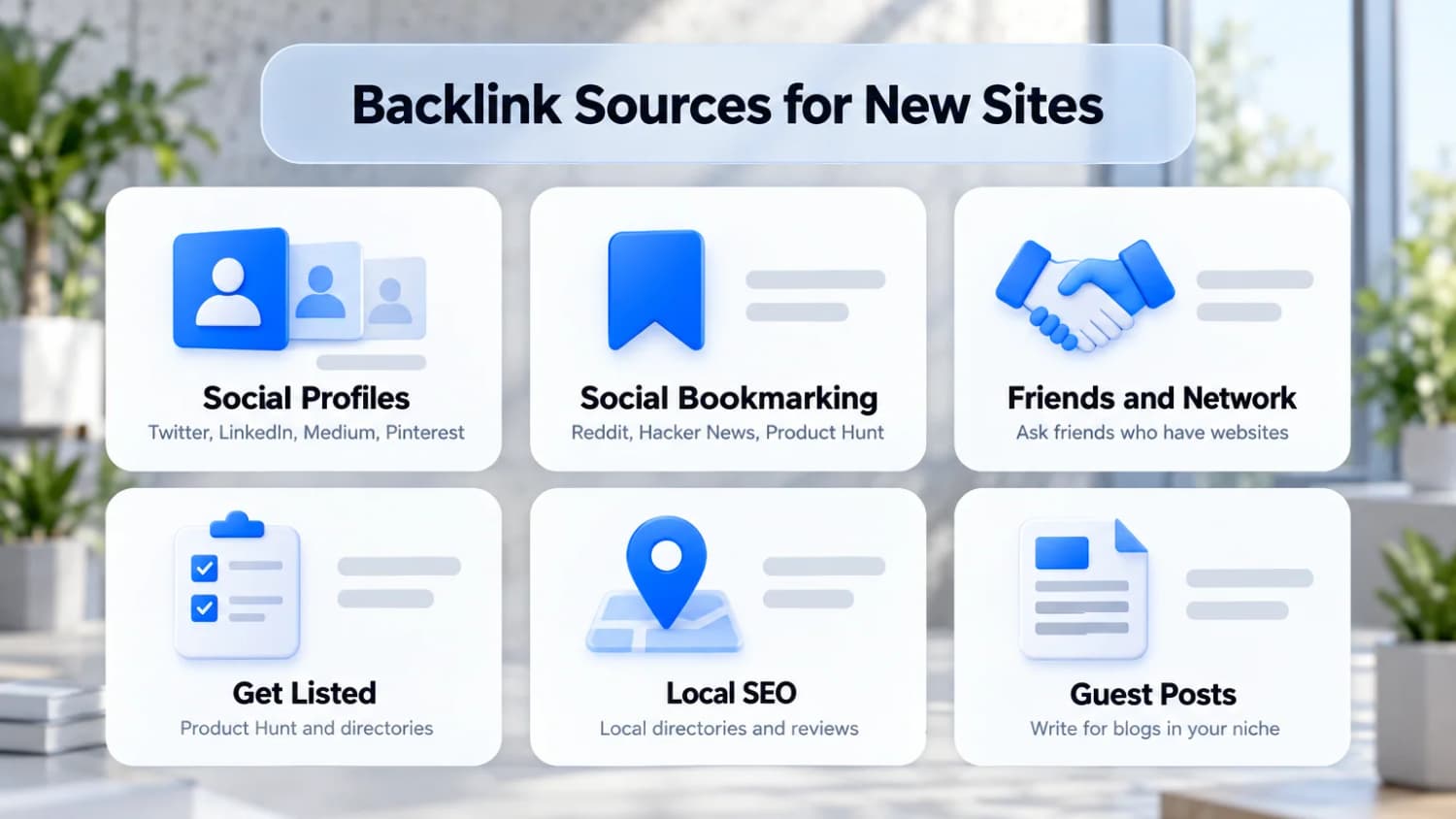
1. Social Media Profiles
Create profiles on platforms like Twitter, LinkedIn, Medium, Pinterest, and others to gain backlinks. These profiles are easy to set up and can be a great source of backlinks. It also helps to have a presence on social media platforms where your target audience hangs out.
You can link to your social media profiles from your website and blog posts. People who search for your brand name will find these profiles and visit them, see what you're up to, and follow you.
- Medium
- YouTube
- Wellfound (formerly AngelList)
- Crunchbase
2. Social Bookmarking Sites
Community sites like Reddit, Hacker News, and Product Hunt let you share content with people who care about your topic. The links themselves are usually nofollow, so their value is not the link. It is the traffic and the other sites that discover and link to your content from there.
Share genuinely useful work, follow each community's self-promotion rules, and take part in discussions before you post your own links.
3. Friends and Network
Reach out to your friends who have websites or blogs and ask them to link to your content. This is a simple and effective way to get backlinks. Just make sure the content you're asking them to link to is relevant and valuable.
Expand your network by:
- Attending industry events and conferences
- Joining professional associations
- Participating in online forums and communities related to your niche
4. Get listed
4.1. Product Hunt
Submit your site to Product Hunt to get backlinks and traffic. Product Hunt is a community of tech enthusiasts who love discovering new products. It's a great place to get your site noticed.
4.2. My picks
4.3 AI Directory
There are many directories that list AI startups. Here are a few services that do the listing for you:
- https://www.submitchecklist.com/
- https://www.srbooster.com/
- https://www.submitjuice.com/
- https://www.startupranking.com/booster
5. Local SEO
Leveraging location-based SEO: For businesses with a local presence, getting listed in local directories and engaging with local community sites can be valuable. Like Google Business Profile.
Other local SEO strategies include:
- Getting listed in local business directories
- Encouraging customer reviews on Google, Yelp, and other platforms
- Participating in local events and sponsorships
- Creating location-specific content on your website
6. Guest posts
Write high-quality articles for blogs in your niche and include links back to your site. This strategy not only helps you build backlinks but also establishes you as an authority in your field.
Tips for successful guest posting:
- Research the target blog thoroughly to understand their audience and content style
- Pitch unique and valuable content ideas
- Follow the blog's guest posting guidelines strictly
- Include a compelling author bio with a link to your website
- Promote your guest post on your own social media channels
Link Building Strategies
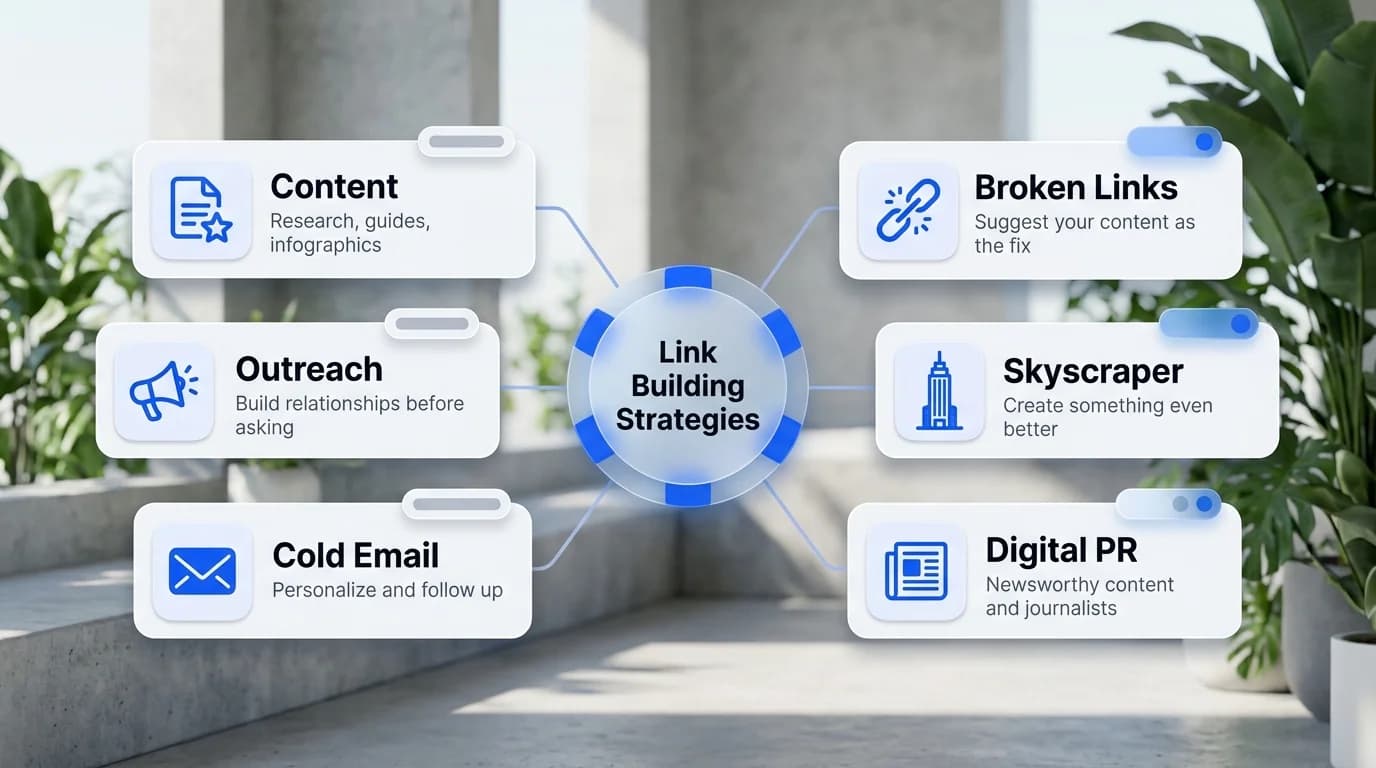
1. Content Creation and Promotion
Develop content that naturally attracts backlinks. This includes original research, comprehensive guides, infographics, and engaging blog posts. Regularly updating your content also keeps it relevant, increasing the likelihood of earning backlinks.
Content types that tend to attract backlinks:
- Industry surveys and reports
- Ultimate guides and how-to tutorials
- Infographics and data visualizations
- Expert roundups
- Thought leadership articles
2. Outreach
Backlink outreach is a great way to get backlinks from authoritative sites.
Engage with influencers, bloggers, and other website owners in your niche. Build relationships before asking for links. Share their content, comment on their posts, and offer value before making any requests.
3. Cold Email
Send cold emails to bloggers and journalists in your niche to ask for backlinks. Personalize your emails and clearly explain the value you're offering.
Tips for effective cold emailing:
- Research your prospects thoroughly
- Personalize each email
- Keep your message concise and to the point
- Clearly state the value proposition
- Follow up politely if you don't receive a response
4. HARO and journalist request platforms
Journalist request platforms send you questions from reporters who need expert sources. Answer quickly and specifically, and you can earn links from news sites and industry publications.
- HARO: shut down by Cision in December 2024, then bought and relaunched by Featured.com in April 2025. It is back to free email digests of journalist queries, now with stricter spam filtering.
- Source of Sources: free, HARO-style digest from HARO's original founder, Peter Shankman.
- Qwoted: a paid platform with vetted journalists. The free plan allows 2 pitches a month; Pro is $149/month.
- #JournoRequest on X: journalists post requests directly, and fast replies win.
Pitch only where you have real expertise. These platforms now filter out generic AI-written answers.
5. Broken Link Building
Broken link building involves finding broken links on other websites and suggesting your content as a replacement.
Find outdated resources and create updated content to replace them, then reach out to websites linking to the old resources and suggest they link to your updated content.
Steps for broken link building:
- Find relevant websites in your niche
- Use tools to identify broken links on these sites
- Create content that could replace the broken link
- Reach out to the website owner, informing them about the broken link and suggesting your content as a replacement
6. Skyscraper Technique
Create high-quality, in-depth content that stands out and attracts backlinks from authority sites. The Skyscraper Technique involves:
- Finding popular content in your niche
- Creating something even better
- Reaching out to sites that linked to the original content
7. Link Roundups
Find and participate in link roundups in your niche to gain backlinks. Many blogs regularly publish roundups of the best content in their industry. Getting featured in these roundups can provide valuable backlinks.
8. Resource Page Link Building
Identify resource pages in your niche and reach out to the website owners to suggest including your content. Resource pages are collections of helpful links on a specific topic, making them excellent targets for link building.
9. Digital PR
Leverage digital PR techniques to gain backlinks from news sites and industry publications. This can include:
- Creating newsworthy content
- Sending press releases
- Building relationships with journalists
- Offering expert commentary on industry trends
10. Competitor Backlink Analysis
Analyze your competitors' backlink profiles to identify potential linking opportunities. If a website is linking to your competitor, they might be interested in linking to you as well.
Use SEO Tools
Use SEO tools like Ahrefs, Moz, and Semrush to find high-quality backlink opportunities. These tools can help you find relevant websites that are likely to link to your content.
Backlink Gap
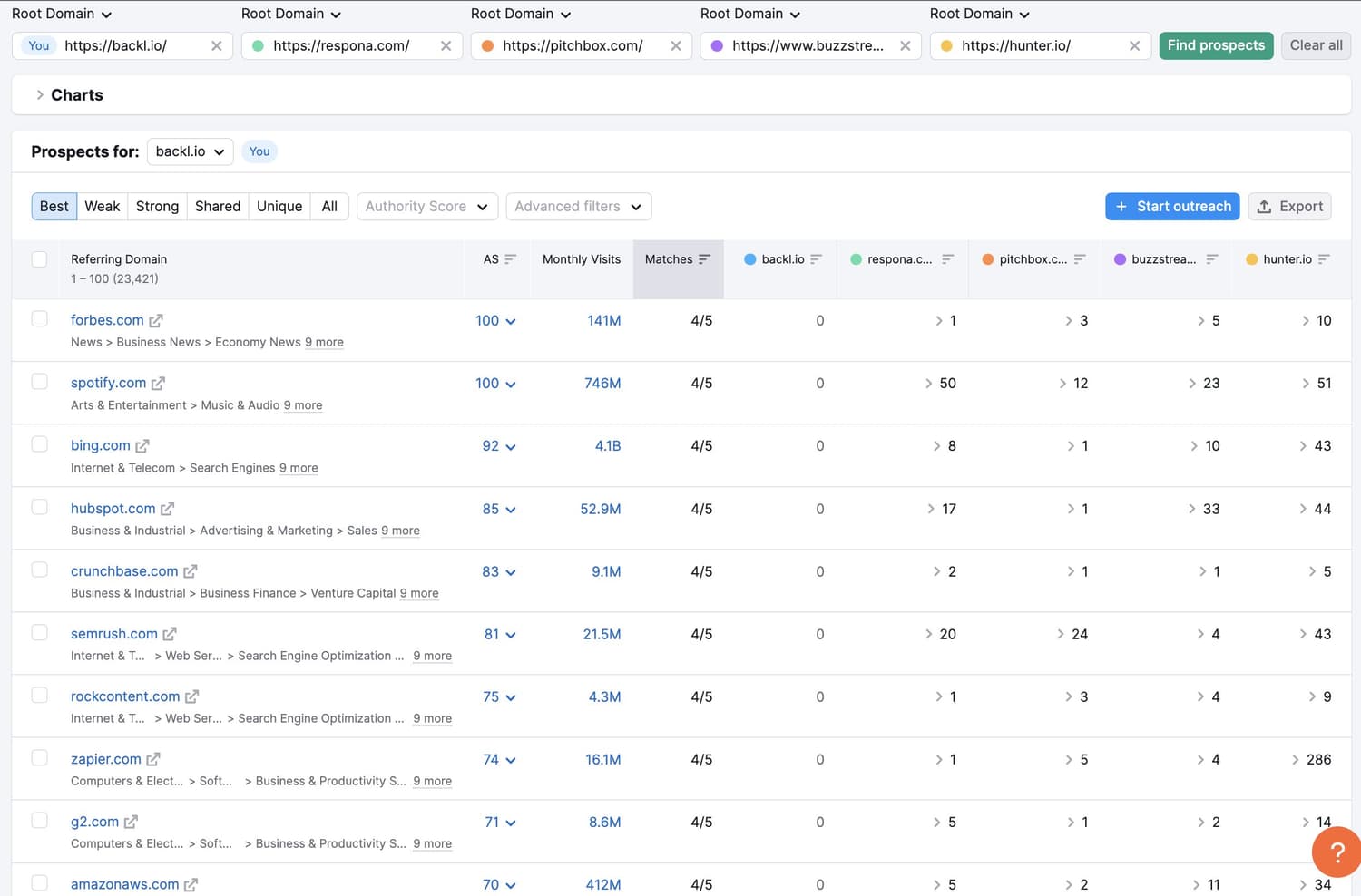
Analyze your competitors' backlink profiles to identify potential linking sites. Understand the strategies they are using and adapt them for your site.
For example, using the backlink gap tool from Semrush, you can compare your backlink profile with that of your competitors. This will help you identify sites that are linking to your competitors but not to you.
Backlink outreach
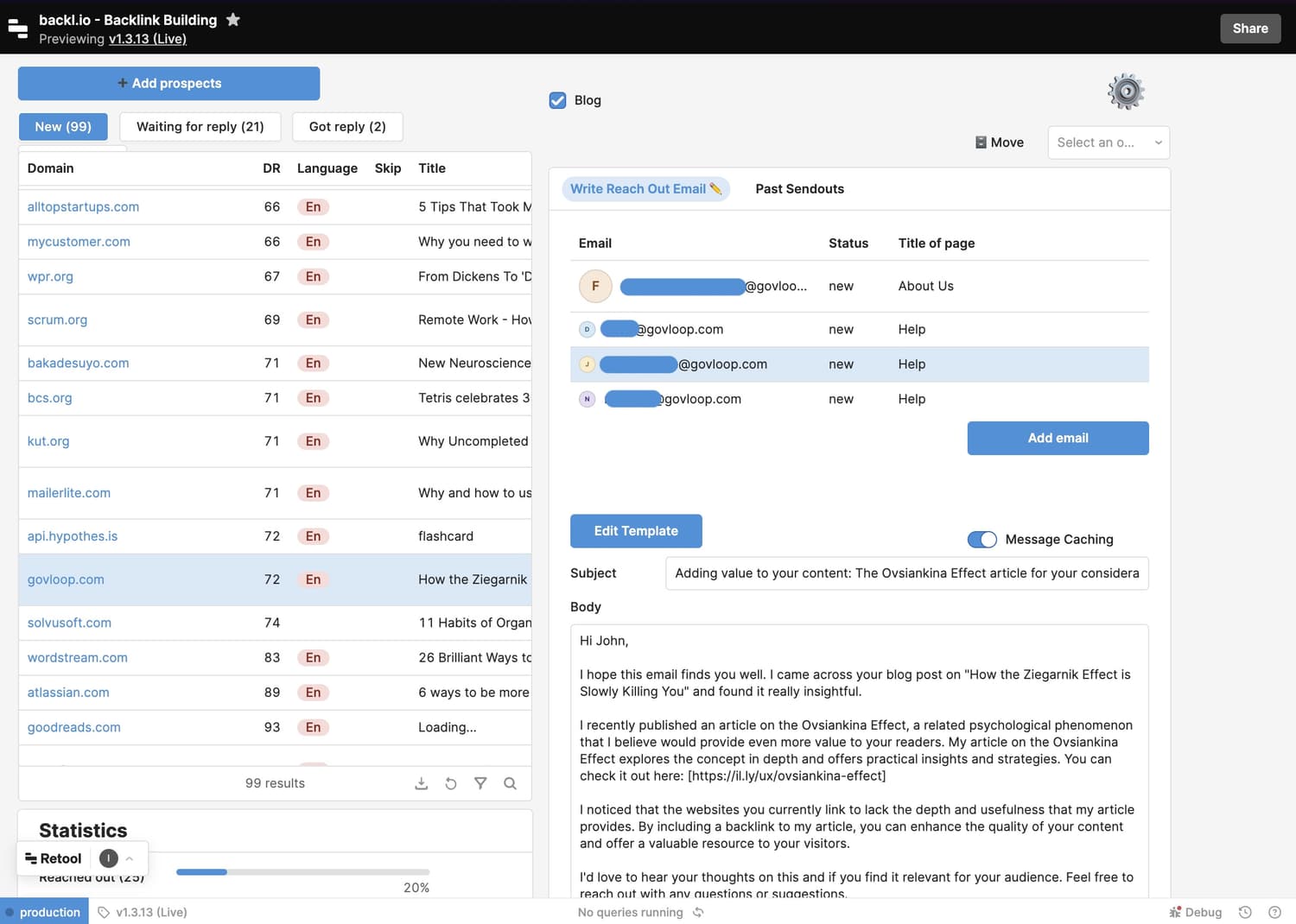
I use Philipp Keller's backlink outreach tool backl.io to find relevant websites and reach out to them for backlinks.
Here is how:
- Find a list of 100 pages linking to a Wikipedia article
- Insert them into backl.io
- It finds emails and you can use an AI template to write and send emails
Common Link Building Mistakes to Avoid
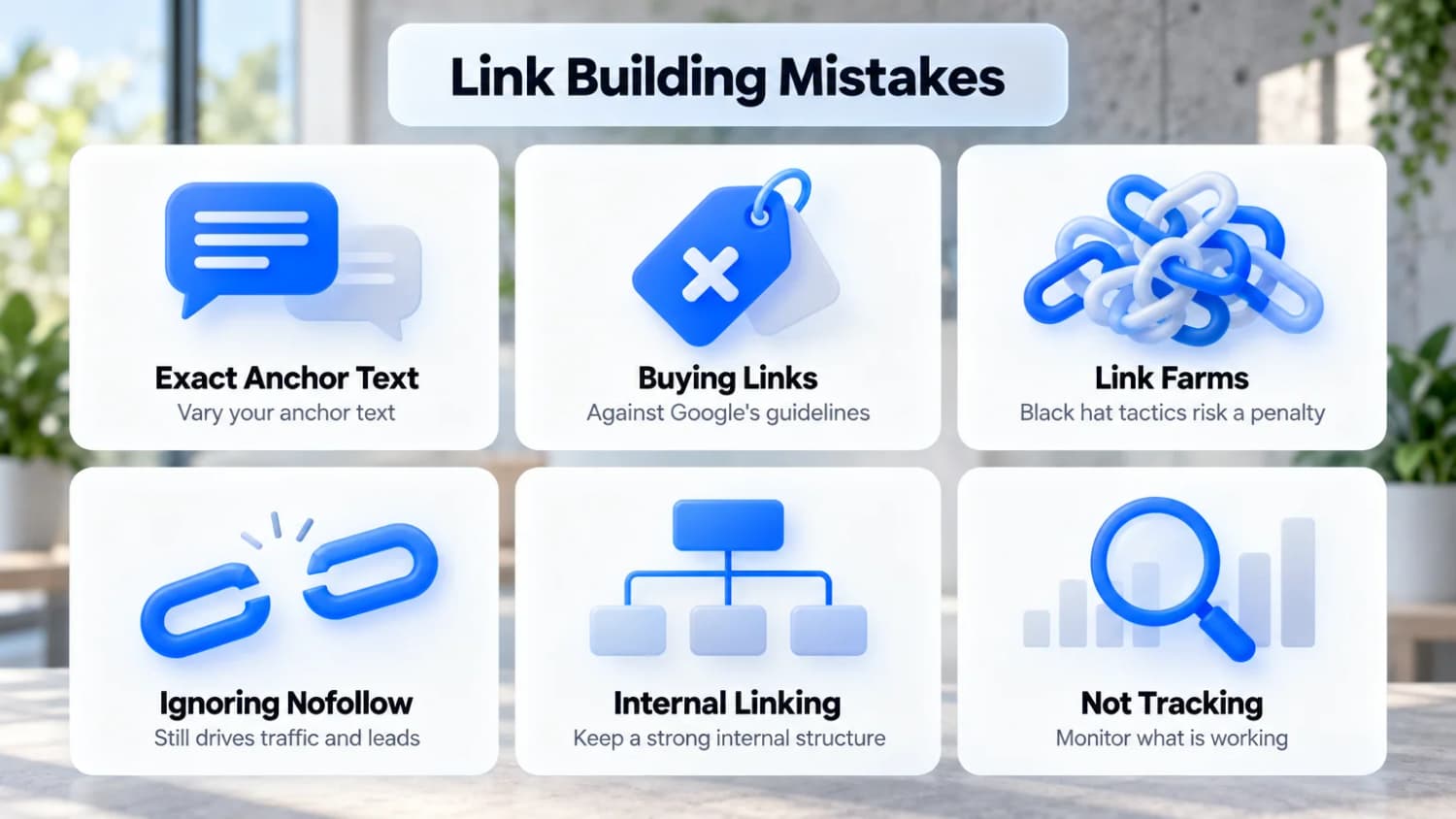
- Ignoring User Intent: Ensure that the backlinks you acquire are relevant to your content and target audience.
- Overusing Exact Anchor Text: Vary your anchor text to avoid over-optimization penalties.
- Creating Low-Quality Content: Create high-quality content that stands out and attracts backlinks from authority sites.
- Link farming: Avoid link farms and other black hat SEO tactics that can get your site penalized by Google.
- Buying Links: Purchasing links is against Google's guidelines and can result in penalties.
- Neglecting Internal Linking: While focusing on external links, don't forget the importance of a strong internal linking structure.
- Ignoring Nofollow Links: While dofollow links are more valuable for SEO, nofollow links can still drive traffic and lead to other linking opportunities.
- Not Tracking Results: Failing to monitor your link building efforts makes it impossible to know what's working and what isn't.
Monitoring and Analyzing Your Backlink Profile
Regularly monitoring your backlink profile is crucial for maintaining a healthy SEO strategy. Here's how to do it effectively:
-
Use Backlink Analysis Tools: Utilize tools like Ahrefs, SEMrush, or Moz to track your backlinks.
-
Monitor New and Lost Links: Keep an eye on new backlinks you've gained and any you've lost.
-
Analyze Link Quality: Assess the quality of your backlinks based on factors like domain authority, relevance, and traffic.
-
Check for Toxic Links: Identify and disavow any potentially harmful links that could negatively impact your SEO.
-
Track Competitor Backlinks: Monitor your competitors' backlink profiles to identify new opportunities.
-
Set Up Alerts: Use Google Alerts or similar tools to get notified when your brand is mentioned online, which could lead to linking opportunities.
For a comparison of tools that alert you when links disappear, see my guide to backlink monitoring tools.
Advanced Link Building Techniques
For those who have mastered the basics, here are some advanced link building techniques:
-
Ego Bait: Create content that features industry influencers, encouraging them to share and link to your content.
-
Newsjacking: Capitalize on trending news stories by creating relevant content quickly and reaching out to journalists covering the story.
-
Podcasting: Start a podcast or appear as a guest on others' podcasts to earn backlinks from show notes and podcast directories.
-
Create Linkable Assets: Develop tools, calculators, or interactive content that naturally attracts links.
-
Scholarship Link Building: Create a scholarship and reach out to educational institutions for .edu backlinks.
-
Reverse Image Search: Find websites using your images without attribution and request backlinks.
-
Unlinked Brand Mentions: Identify instances where your brand is mentioned but not linked, and reach out to request a link.
The Role of SEO Audits in Link Building
An often overlooked aspect of link building is the importance of regular SEO audits. SEO Audit offers professional search engine optimization (SEO) audits that can significantly enhance your link building efforts. Here's how:
-
Identifying Link Opportunities: An SEO audit can reveal gaps in your backlink profile and suggest potential opportunities for new links.
-
Assessing Link Quality: SEO Audit's experts can evaluate the quality of your existing backlinks, helping you focus on building high-quality links that will have the most impact.
-
Competitor Analysis: Their full-service SEO audit includes a comprehensive analysis of your competitors' link building strategies, providing valuable insights for your own efforts.
-
Technical SEO Improvements: By addressing technical SEO issues, you can make your site more attractive to potential linkers and improve the effectiveness of your link building campaigns.
-
Content Strategy Recommendations: SEO Audit can provide actionable insights on creating link-worthy content that naturally attracts backlinks.
-
Penalty Risk Assessment: Their audits can identify any risky link building practices that might lead to penalties, helping you maintain a clean and effective backlink profile.
SEO Audit offers various types of audits to suit different needs and budgets:
- Public Video Audit ($250): A 15-20 minute video audit that's publicly visible.
- Private Video Audit ($550): A 15-20 minute video audit kept private for your eyes only.
- Full-Service SEO Audit ($3,735): A comprehensive SEO audit and strategy, including in-depth link building recommendations.
By incorporating regular SEO audits into your link building strategy, you can ensure that your efforts are focused, effective, and aligned with best practices.
Conclusion
Link building is an essential part of SEO success. Use this comprehensive guide to get your first 100 backlinks and beyond, starting your journey to climbing the search rankings.
Remember, link building is a long-term strategy; consistency in applying these techniques is crucial. Patience is key as results from link building efforts may take time to materialize.
As you progress, an SEO audit by Ilias Ism can show which pages deserve links first and which technical issues would waste them.
Keep learning, stay updated with the latest SEO trends, and continuously refine your link building strategies. With persistence and the right approach, you'll see your website's authority grow and your search rankings improve over time.
Should you hire a link building agency or service?
If you do not have time for outreach, outsourcing is reasonable, as long as you vet the provider. Disclosure: I run the first two.
- LinkDR: buy individual placements on vetted sites with real traffic, priced per link (from $160 at DR 30+), with tracking after placement.
- MagicSpace SEO: my agency, for monthly SEO that includes content and link building.
Whoever you hire, ask to see example placements, check that the linking sites get real organic traffic, avoid anyone promising hundreds of links a month, and track every link you pay for.